The group trip that goes wrong financially almost never goes wrong because of a number. It goes wrong because two people had different pictures in their heads and neither said so.
One imagined hostels and street food. The other imagined a nice hotel and a tasting menu. Both booked flights before anyone found out.
Have the range conversation first
Before the destination, before the dates, ask one question: roughly what do you want to spend, per person, all in.
Ask for a range rather than a number, because ranges are easier to say out loud. "Somewhere between 600 and 900" is a comfortable sentence. "I can afford 640" is not.
If the ranges overlap, you have a trip. If one person says 400 and another says 1,500, you do not have a budget problem, you have two different trips, and it is much kinder to find that out now.
The three bucket budget
Split the total into three, because each behaves differently and needs different rules.
| Bucket | What is in it | How it is paid | Who decides |
|---|---|---|---|
| Fixed | Flights, accommodation, car hire | Booked in advance, usually by one person | The whole group, before booking |
| Daily | Food, local transport, coffee, entry fees | As you go, split as you go | Individually, within the agreed daily figure |
| Optional | Diving, a big dinner, a concert, a day tour | Only by those who join | Each person, no explanation needed |
Most disputes live in the third bucket, and almost all of them are preventable by naming those activities before you leave.
Set the daily number
The daily figure is the one that determines whether the trip feels relaxed or tense.
Work it out roughly: a sit down meal, a casual meal, coffee, local transport, one entry fee. Add a bit. That is your daily. Multiply by nights and you have the second bucket.
Agreeing this in advance gives everyone permission to spend without checking, which is the actual goal. A group where each person silently wonders whether the others think this restaurant is too expensive is not having a good time.
The optional activities rule
This is the single most valuable agreement to make, and it takes one sentence.
"Anything optional is opt in, nobody explains why, and nobody is subsidised." Say it before you go and the diving trip stops being awkward. The person who does not want to spend 120 on a boat says so without a story about their finances, and the people who do go stop feeling guilty.
Without that rule, the group defaults to either everyone doing everything, which blows budgets, or someone quietly opting out and feeling left behind.
Who fronts the big bookings
Someone has to put 2,000 on a card for the accommodation, and that person is carrying the group's money until repayment.
- Agree the repayment window before booking, ideally within a week
- Split the booking across two people if it is large, so nobody carries it alone
- Log it as an expense the day it is paid, not when you arrive
- If someone cannot pay their share up front, agree that before booking rather than after
Fronting money is a favour, not a formality. Treating it as one keeps the person doing it willing to do it again next year.
Track it as you go, not at the end
The end of trip reckoning is where friendships get tested, and it is entirely avoidable.
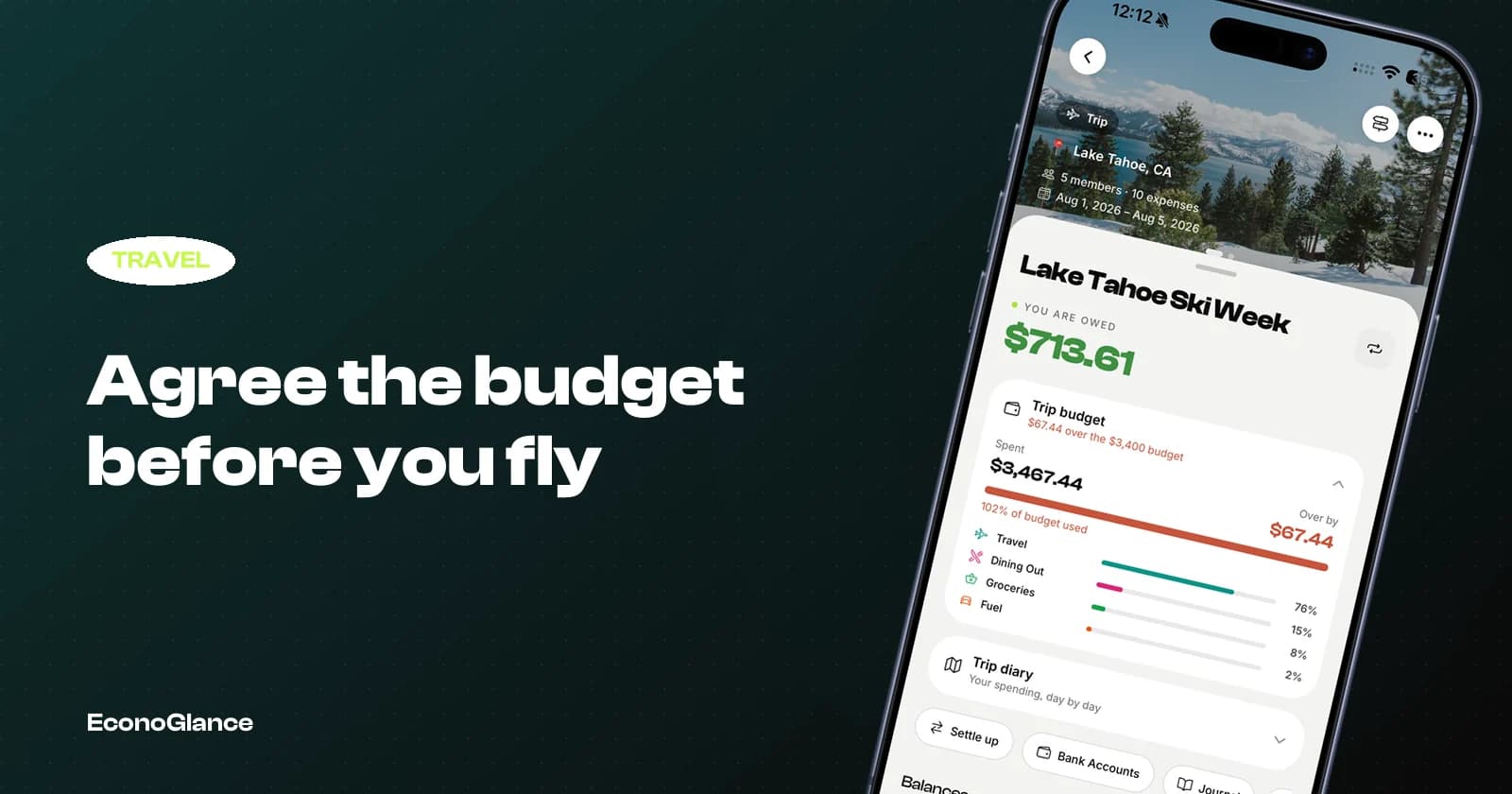
Log each expense as it happens and the total is simply correct on the last night. EconoGlance trips carry a budget, so you can see the group's spend against the agreed number while there is still time to adjust. See travel expenses, or splitting expenses on a group trip for the mechanics.
Build in a buffer
Add ten percent to whatever you agree and tell people you have done it.
Trips overrun. A taxi at 2am, a cancelled train, a meal that turned out to be much pricier than the menu outside suggested. A stated buffer means the overrun is expected rather than a failure, and nobody has to be the one who raises it.