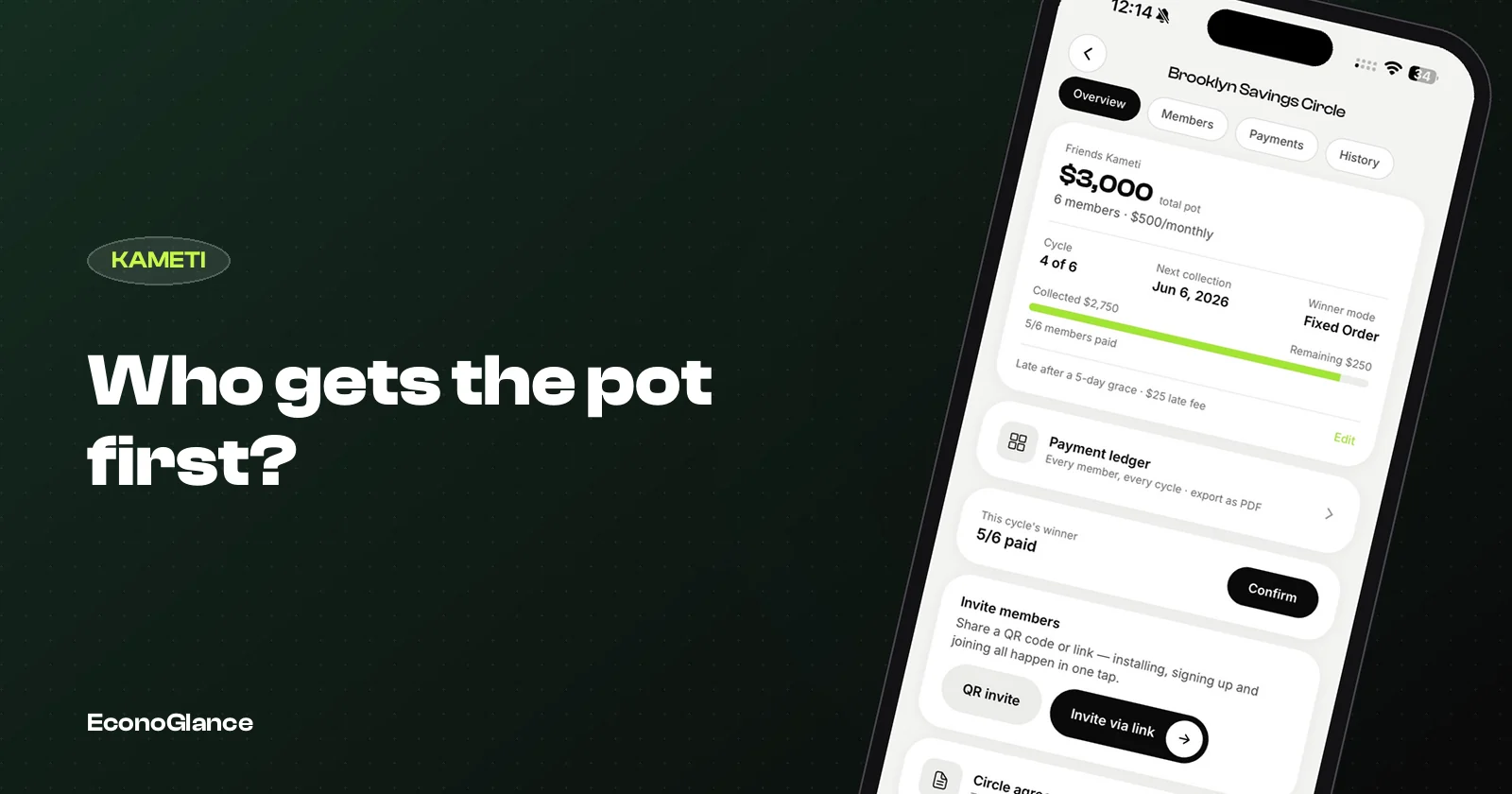
A kameti, also called a committee or BC, is a group that pays a fixed amount into a pot every month, with one member taking the whole pot each round until everyone has had a turn. Every member pays in the same total and takes out the same total. The only thing the payout order changes is timing.
Timing is not a small thing. The member who goes first gets a large sum almost immediately and pays it back over the following months. The member who goes last has lent money to everyone else. There are three common ways to decide that order: fixed turns, a draw, and bidding. This guide works through each with real numbers.
Why the order matters more than people think
Take a common setup. Ten members pay Rs 20,000 a month, so the pot is Rs 200,000 and the kameti runs for ten months.
The member who takes the pot in month one has paid in Rs 20,000 and receives Rs 200,000. In effect they have borrowed Rs 180,000 from the group, interest free, and repay it at Rs 20,000 a month for the next nine months.
The member who takes the pot in month ten has paid Rs 180,000 before receiving anything. They have saved, and they have carried the risk that someone who already took the pot stops paying. That risk is the heart of every kameti dispute, which is why the order and the rules around it deserve a proper decision.
| Turn | Paid in before payout | Receives | What it works like |
|---|---|---|---|
| Month 1 | Rs 20,000 | Rs 200,000 | Interest-free loan of Rs 180,000 |
| Month 5 | Rs 100,000 | Rs 200,000 | Half saving, half loan |
| Month 10 | Rs 200,000 | Rs 200,000 | Pure saving, carrying everyone's default risk |
Academic work on rotating savings groups says the same thing in more formal terms. The economists Besley, Coate and Loury showed in 1993 that both random and bidding allocation leave members better off than saving alone, and that which one is better depends on whether members have similar needs or very different ones. That is the practical test this guide uses too.
Method 1: Fixed turns
The order is agreed at the start and written down. Month one goes to the first name on the list, and so on.
Groups usually settle the order by need. A member with a wedding in March takes an early turn. A member saving for something two years away happily goes last. Some groups put the organiser first, on the reasoning that they are doing the work. That is common, but it concentrates risk: the organiser has the pot and holds everyone else's money from then on.
- Best for: families and close friends whose big expenses are known in advance.
- Strength: everyone can plan. You know exactly which month your money arrives.
- Weakness: the order can feel like favouritism, especially if the organiser goes first.
- Watch for: early receivers who slow down their payments once they have been paid.
Method 2: A draw
Each round, the name of the next recipient is drawn from those who have not yet received the pot. In Pakistan this is often called a parchi or qurandazi, slips of paper in a bowl.
A draw is the fairest method when nobody has a stronger claim than anyone else. It removes the organiser's discretion, which removes the most common accusation in a kameti. Its weakness is the mirror image: someone with a real emergency may wait months for luck.
The single rule that makes a draw trusted is that it happens in front of everyone. In a room, or on a group video call, or in an app that shows the result to every member at once. A draw that one person does alone, and announces later, is a fixed order with extra steps.
Method 3: Bidding
Members who want the pot early bid a discount, the amount they are willing to give up to receive it now. The highest bid wins. The winner takes the pot minus the discount, and the discount is shared among the other members.
Using the same ten-member kameti: in month two, Ali needs money urgently and bids Rs 15,000. Nobody bids higher. Ali receives Rs 185,000 instead of Rs 200,000, and the Rs 15,000 is split among the other nine members, about Rs 1,667 each, usually as a reduction in that month's payment.
| Month | Winning bid | Winner receives | Each other member saves |
|---|---|---|---|
| 2 | Rs 15,000 | Rs 185,000 | Rs 1,667 |
| 3 | Rs 10,000 | Rs 190,000 | Rs 1,111 |
| 9 | Rs 0 | Rs 200,000 | Rs 0 |
Bidding is how India's regulated chit funds allocate the pot, with a licensed foreman who takes a commission. India raised the foreman's maximum commission from 5% to 7% of the chit amount in its 2019 amendment to the Chit Funds Act. Informal bidding committees in Pakistan, often called BCs, use the same idea without a foreman.
Bidding puts a price on urgency, which is efficient. It also means later receivers earn a small return, which some groups like. Two cautions. It is more complicated to record correctly, because every month's payment changes. And some members avoid it because the discount works like interest. Views on that differ, so if anyone in your group is uncomfortable with it, choose a draw or fixed turns instead of overriding them.
The three methods side by side
None is best in general. Each is best for a particular kind of group.
| Fixed turns | Draw | Bidding | |
|---|---|---|---|
| Who decides | Agreed up front | Chance | The highest discount |
| Best for | Known needs, close groups | Equal needs, mixed groups | Urgent and uneven needs |
| Predictability | High | Low | Low |
| Dispute risk | Favouritism | Rigged draw claims | Recording errors |
| Payments each month | Same | Same | Change with each bid |
Hybrids that work in practice
Many groups mix methods rather than picking one.
- Draw with an emergency override: a member with a documented emergency can ask the group to take the next turn, and the group votes.
- Fixed turns with swaps: the order is set, but two members can agree to swap months, with the swap recorded.
- Organiser second, not first: the organiser takes an early turn but not the first, so at least one other member is paid before them.
Swaps and overrides are where records go wrong. If two members swap, write down who now receives which month, and make sure every member can see it.
How to choose for your group
Three questions settle it.
- Do several members have a known big expense in a specific month? Use fixed turns and order by date of need.
- Are needs similar, or does the group include people who do not know each other well? Use a draw, held in front of everyone.
- Do one or two members need money urgently while others are happy to wait? Consider bidding, if everyone is comfortable with it.
Then write it down. The rules that prevent most disputes are covered in the kameti rules that prevent every common dispute, and you can model the pot and each member's position in the free savings circle calculator.
Running the order in EconoGlance
EconoGlance has a kameti feature built for exactly this, and it is honest about what it does and does not do.
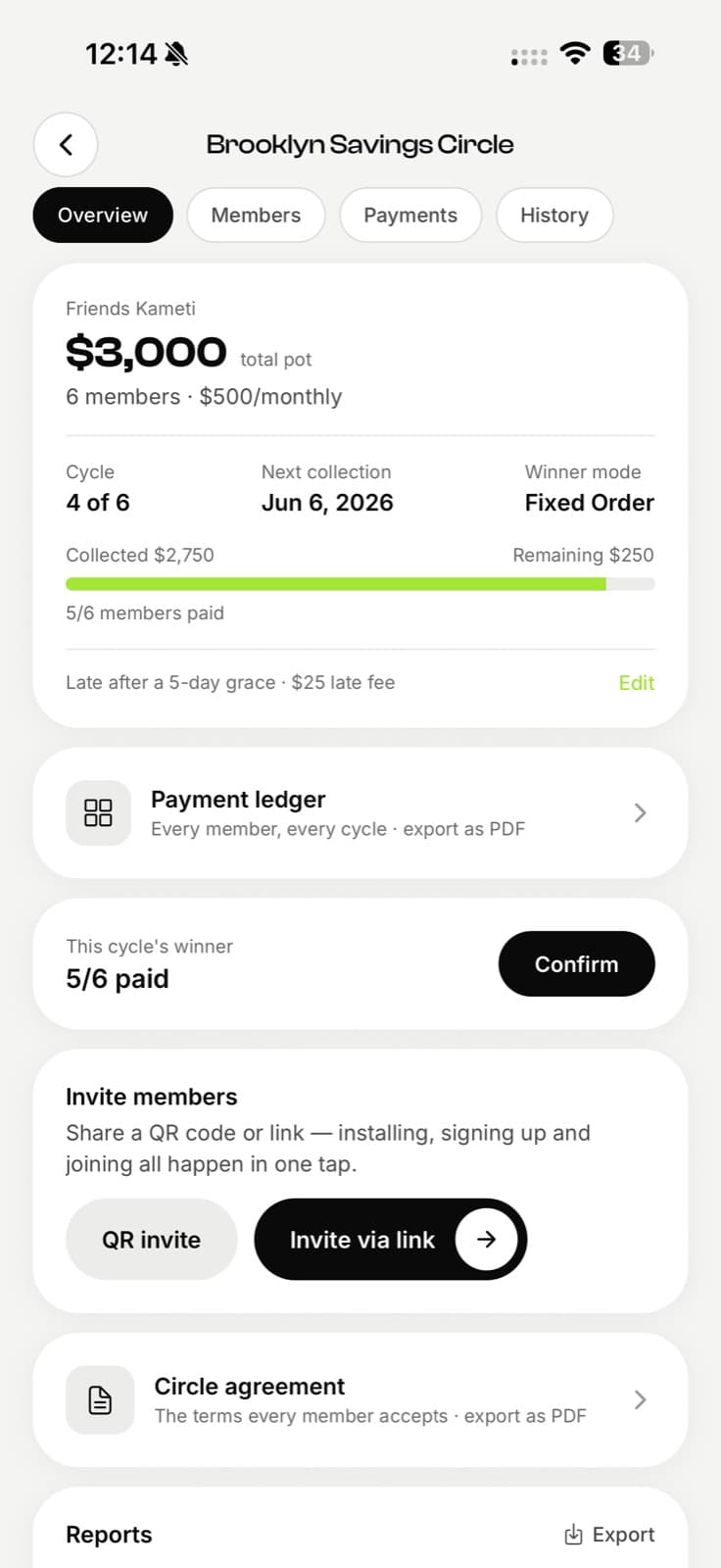
When you create a circle you choose how the winner is picked: Fixed Order, Lucky Draw (a random winner once everyone has paid that round), Manual (the organiser picks), Quiz Based, or Emergency Priority, where members request an early turn and the group votes. Every member sees the result at the same moment. EconoGlance does not run bidding. If your group bids, record the winner manually and note the discount.
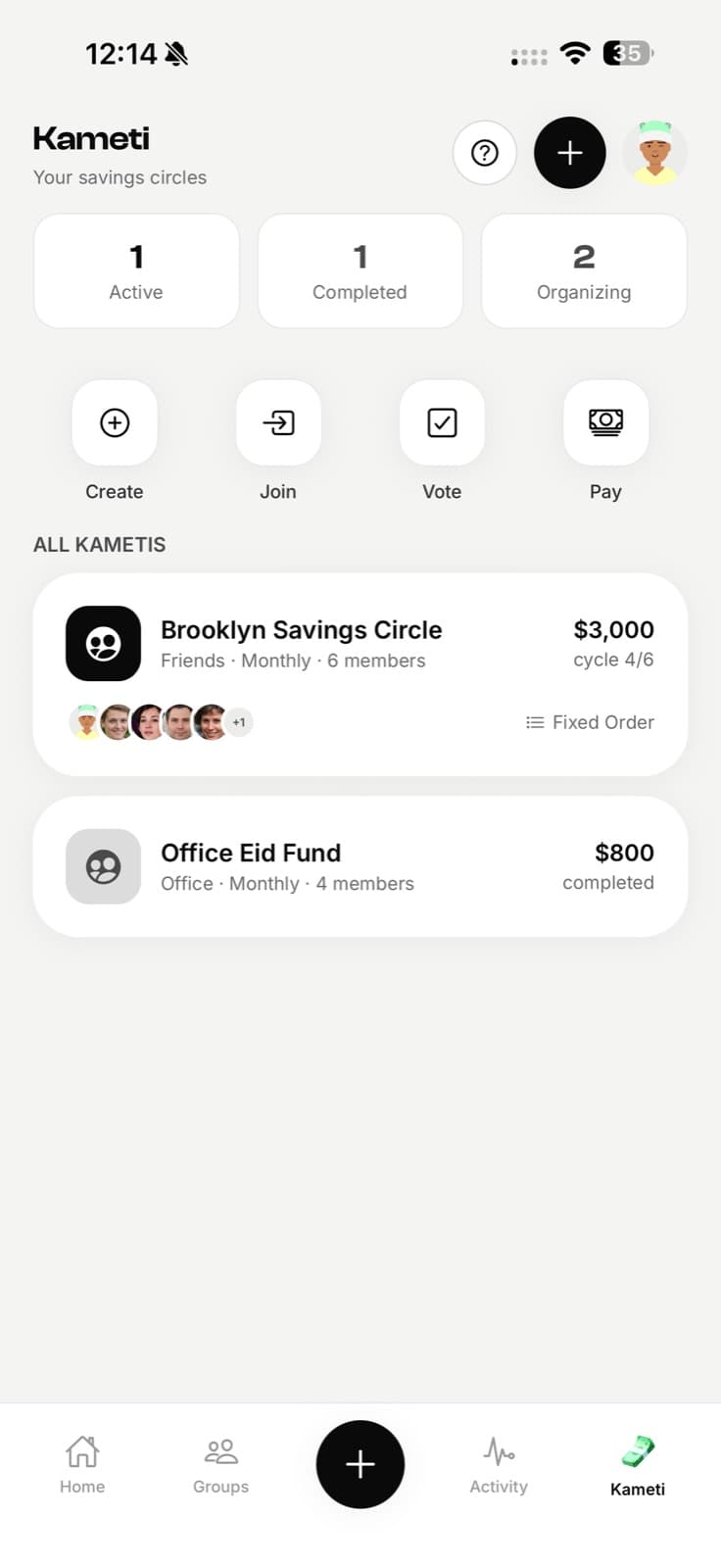
Creating one circle is free, and joining circles is unlimited. Read the full kameti guide for how committees work end to end.