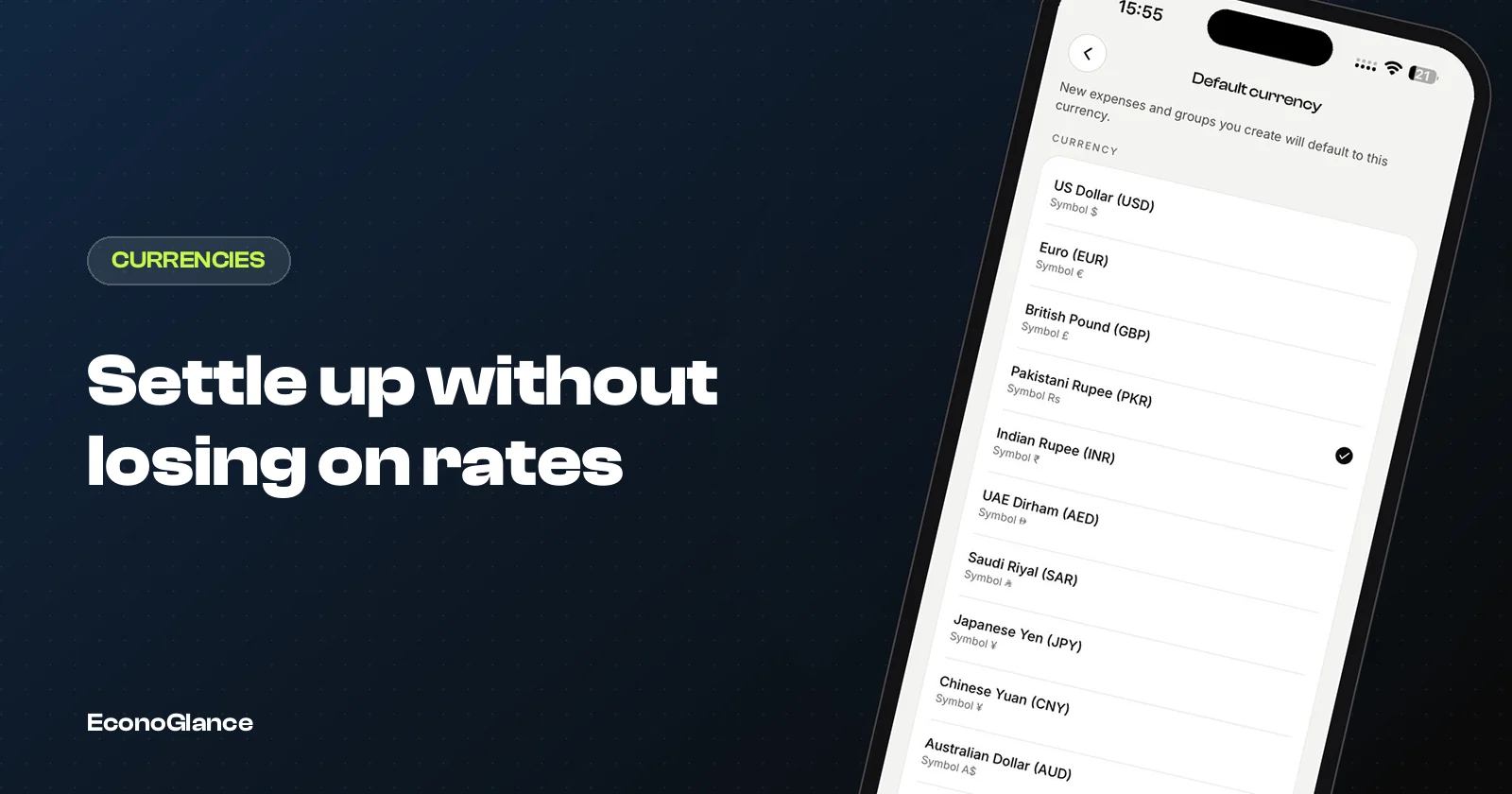
To settle up across currencies without anyone losing money, agree a single settlement currency and a single exchange rate source before the trip, record every expense in the currency it was paid in, convert the final balances at that agreed rate, and settle promptly. Use a mid-market reference rate rather than the rate a bank, card or exchange booth gives you, and always pay card terminals in the local currency.
Where the money is lost
Group money across currencies leaks in three places.
| Leak | What happens | Typical cost |
|---|---|---|
| Card foreign transaction fees | The card issuer adds a percentage to purchases in another currency | Often 1% to 3% |
| Dynamic currency conversion | A terminal or ATM offers to charge you in your home currency at its own rate | A mark-up that must be disclosed in the EU, usually worse than your bank's rate |
| Settling at a bad rate | Debts are converted at whatever rate the payer's bank uses | Varies, and lands on whoever pays |
Foreign transaction fees generally range from 1% to 3% of each purchase, made up of a network fee and the issuing bank's own charge. Cards without them are worth getting for anyone who travels often.
Never accept dynamic currency conversion
When a card machine or cash machine abroad asks whether you want to pay in your home currency, say no and pay in the local currency.
That offer is dynamic currency conversion, and the provider sets the exchange rate. The EU considered the practice serious enough to regulate: under Regulation (EU) 2019/518, providers of currency conversion at a cash machine or point of sale must disclose their total charges as a percentage mark-up over the latest euro reference rates published by the European Central Bank, before you pay. Paying in the local currency lets your own card do the conversion, which is usually cheaper.
Agree the settlement currency and rate first
The single most useful decision a multi-currency group can make.
- Settlement currency: usually the currency most of the group earns in, or the currency of the person most people owe.
- Rate source: a mid-market reference such as the European Central Bank's daily euro reference rates, published around 16:00 CET each working day for about 30 currencies, or a reputable mid-market rate if your currencies are not covered.
- Rate date: the date you settle, or the last day of the trip. Pick one.
Using the same reference rate for everyone means nobody's bank decides who wins. The ECB itself notes its reference rates are for information, not actual trades, which is exactly what a group needs: a neutral number to agree on.
A worked example
Three friends from the UK and one from Pakistan take a trip to Turkey.
During the trip they pay in Turkish lira. At the end, the app's balance shows that Zara, who lives in Lahore, owes Tom, in London, 3,000 lira. They agreed to settle in pounds at the reference rate on the last day of the trip. If that rate is 45 lira to the pound, Zara owes Tom £66.67. She sends that amount in pounds through a low-cost transfer service, and her own transfer fee is hers to bear.
| Step | Amount |
|---|---|
| Debt in trip currency | 3,000 TRY |
| Agreed reference rate (example) | 45 TRY per GBP |
| Debt in settlement currency | £66.67 |
| Who pays transfer fees | The sender, as agreed |
The rate in the example is illustrative. Use the actual reference rate for your settlement date.
Who pays transfer fees?
Agree this too, because it is where small resentments start.
The simplest rule is that the person sending money pays their own transfer fee, and the recipient receives the full agreed amount. It is consistent, and it rewards people who choose cheaper ways to send money. For very small amounts across currencies, some groups agree to round off or carry the balance to the next trip instead of paying a fee larger than the debt.
Settle soon
Exchange rates move. A debt left for three months can change value in either direction, and the person it moves against will notice.
Settle within a week or two of the trip, at the agreed rate. If someone cannot pay for a while, agree whether the amount is fixed in the settlement currency now, which is the cleaner choice.
Tracking a multi-currency group in EconoGlance
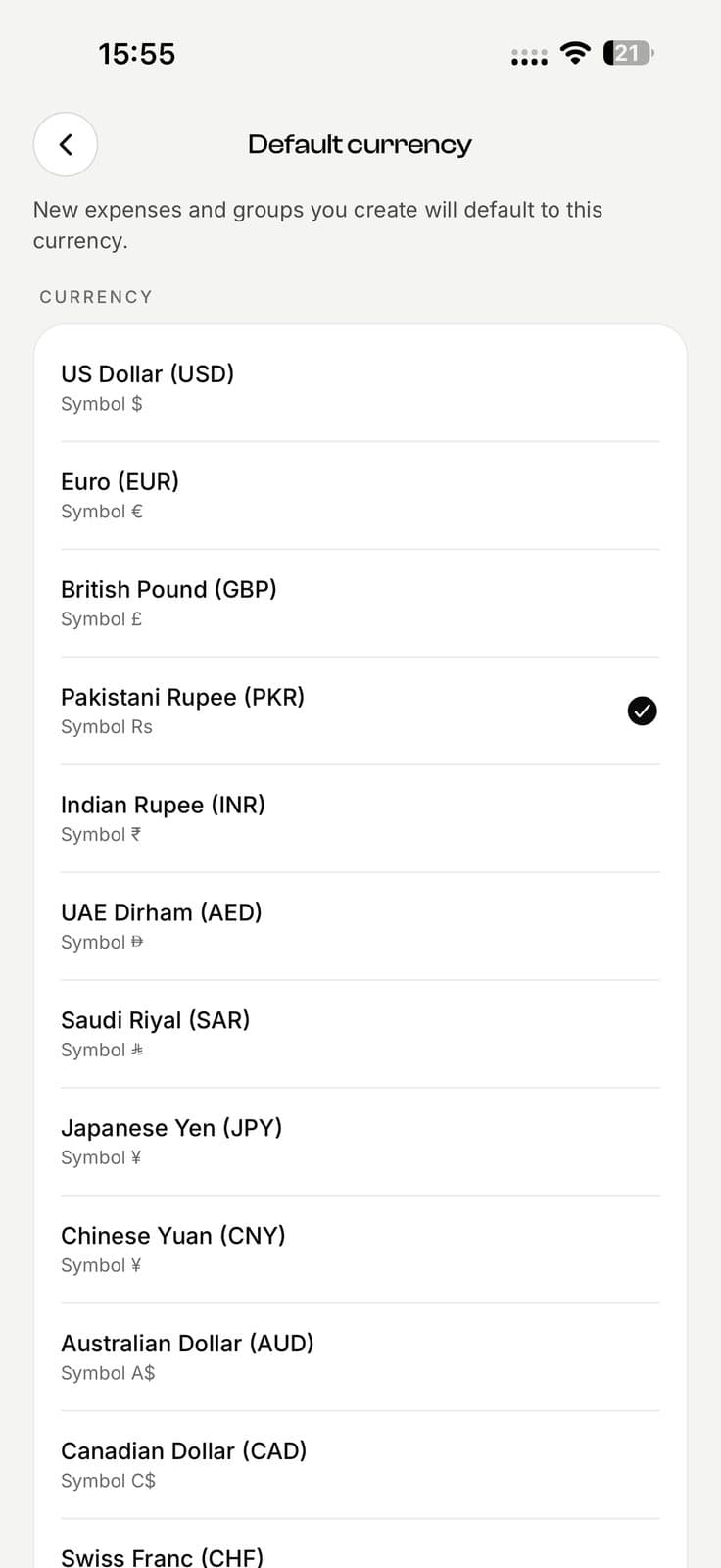
EconoGlance supports more than 35 currencies.
Each group has one currency, fixed once set, so its balances stay consistent. That makes the trip currency, or the settlement currency, a natural choice for the group. Your combined balances across groups can be shown in your own home currency. When you settle up, you record the payment in the group's currency, and the group shows as settled.
For the trip itself, read how to split expenses on a group trip, and for groups whose members live in different countries, how to split bills when you live in different countries.