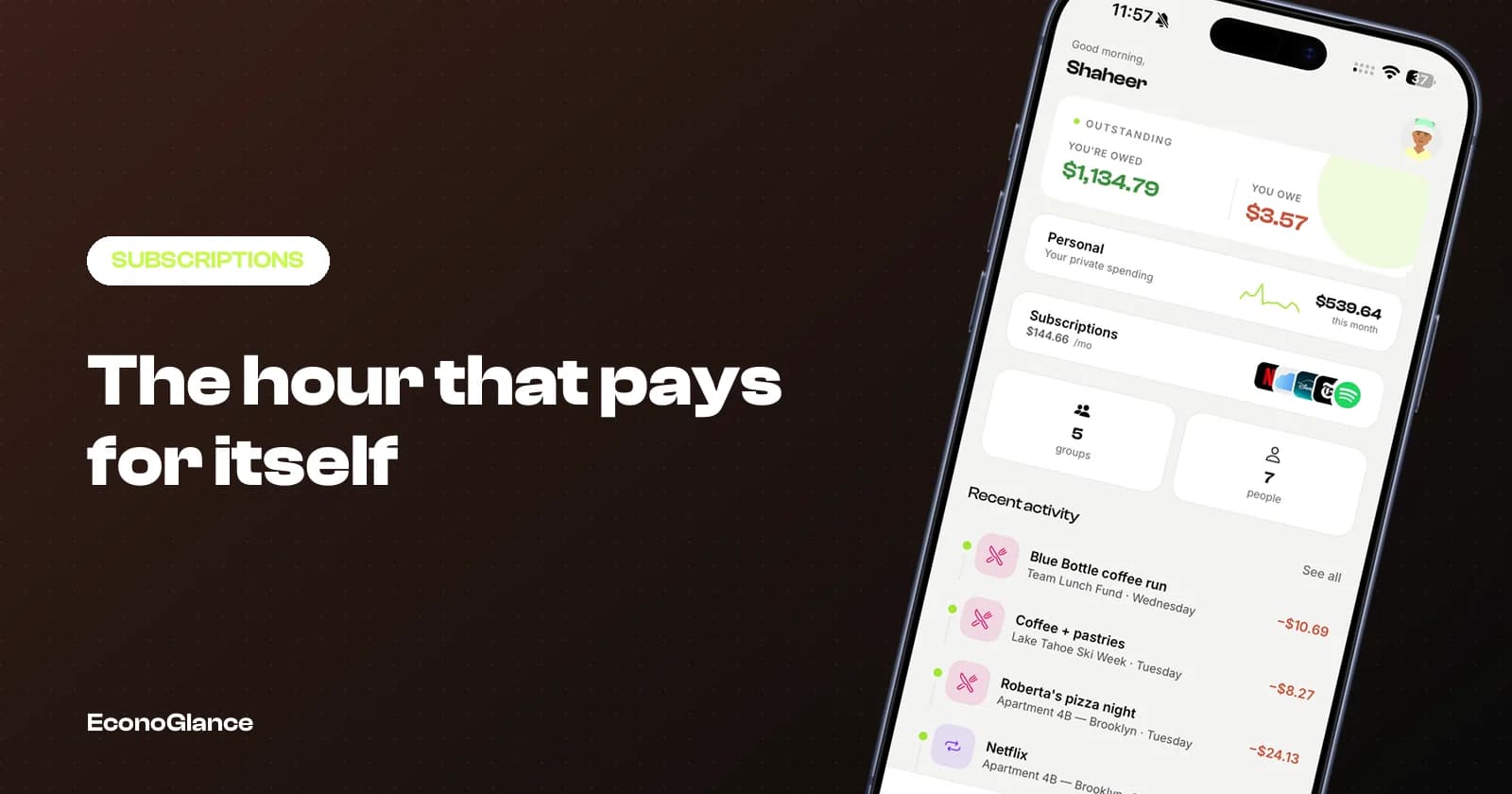
Subscriptions are designed to be forgettable. Small amounts, monthly, on a card you rarely examine. That is not a criticism of the businesses, it is just how the model works.
An audit is the counterweight, and it needs doing about once a year.
Step 1: gather twelve months
Not one month. Twelve.
A single month's statement misses every annual subscription, and annual ones are usually the expensive ones. Pull a year of statements from every account and card you use, including any you rarely touch.
Do not skip the card you only use for one thing. That is exactly where a forgotten annual renewal lives.
Step 2: list everything recurring
Go through and write down anything that appears more than once with the same merchant.
Include the ones you are sure about. The point is a complete list, and the sure ones are needed to compare against the rest.
Watch for names that do not match the product. Many subscriptions bill under a parent company or a payment processor name, so a line you do not recognise is worth searching before you assume it is fraud.
Step 3: sort by annual cost
This is the step that changes decisions.
| Subscription | Monthly | Annual | Feels like |
|---|---|---|---|
| Streaming A | 12.99 | 155.88 | Small monthly, significant yearly |
| Cloud storage | 9.99 | 119.88 | Invisible, rarely questioned |
| Fitness app | 14.99 | 179.88 | Bought in January, unused by March |
| News | 4.99 | 59.88 | Genuinely cheap |
| Software, annual | 89.00 | 89.00 | Feels big, is mid-table |
Sorted this way, the fitness app is the biggest line, not the software you flinched at. Monthly pricing exists partly because 14.99 does not feel like 180.
Step 4: the three question test
For each one, in order.
- Have I used this in the last month? If no, that is a strong signal on its own.
- Would I buy it today at this price, knowing what I know? Not "is it good", but would I choose it now.
- Is there a cheaper tier that covers what I actually use?
The second question is the useful one. Plenty of subscriptions are good products that you would not choose again, and the sunk cost of having paid for eight months is not a reason to pay for a ninth.
Step 5: cancel on the day
Decide and act in the same session, because a cancellation you postpone does not happen.
Expect friction. Retention flows are deliberately several steps deep, and some services still require a phone call or a form. Budget ten minutes for the awkward ones and do them first while you have momentum.
- Note the renewal date of anything you are keeping but unsure about
- Take a screenshot of the cancellation confirmation
- Check next month's statement to confirm it actually stopped
That last one matters. Cancellations do occasionally fail, and the charge continuing is easy to miss precisely because you have stopped looking for it.
Step 6: set up the early warning
The audit fixes today. A tracker stops it happening again.
Record what you keep with its price and renewal date, and get a reminder before each one renews rather than after. EconoGlance tracks subscriptions with renewal reminders, free trial warnings and price change alerts, so a quiet increase does not go unnoticed. See recurring and subscriptions and how to find subscriptions you forgot about.
The trials rule
Most accidental subscriptions start as a free trial nobody meant to keep.
The habit that fixes it permanently: the moment you start a trial, set a reminder for two days before it converts. Not on the last day, because you will be busy. Two days gives you time to decide properly, and it turns the trial back into what it was supposed to be.