This confuses almost everyone at some point. You know roughly what you spent last month. The bill arrives with a different number, sometimes dramatically.
Nothing has gone wrong. Cards run on their own calendar.
The three dates that matter
Every credit card has these, and mixing them up is the root of most confusion.
| Date | What it means | Common mistake |
|---|---|---|
| Statement date | The day the cycle closes and the bill is generated | Assuming it is the end of the month |
| Due date | The day payment must reach the issuer | Thinking it is the same as the statement date |
| Posting date | When a transaction actually lands on the account | Assuming it is the day you paid |
A typical card might close on the 18th and be due on the 12th of the following month. So the bill you pay in July covers spending from mid-May to mid-June. It is not the calendar month, and it is not even the previous month.
Why the totals differ
Three separate effects, which often stack.
- The cycle straddles two calendar months, so it includes days you were mentally counting elsewhere
- Transactions post a day or several after you paid, so a purchase on the 17th can land on the 19th and jump to the next bill
- Refunds and pending amounts settle on their own schedule, sometimes weeks later
The posting delay is the one that produces the biggest surprises. Book a holiday on the evening of your statement date and it may fall either side, changing your bill by hundreds depending on how the merchant processed it.
Pending versus posted
A pending transaction is an authorisation, not a completed charge.
The merchant has reserved the amount but not claimed it. Until it posts, the final figure can change. Restaurants are the classic case: they authorise the bill amount, then post it later with the tip added, so the pending and posted amounts differ.
Hotels and car hire are worse, often authorising a deposit far above the final cost. That reservation reduces your available credit for days without ever becoming a charge.
How to make the numbers agree
If you want your tracking to match your bill, track by cycle rather than by calendar month.
That means knowing your statement day and treating the period between statement days as the unit. Everything you spend between the 18th of one month and the 18th of the next is one bill, regardless of which calendar months those days belong to.
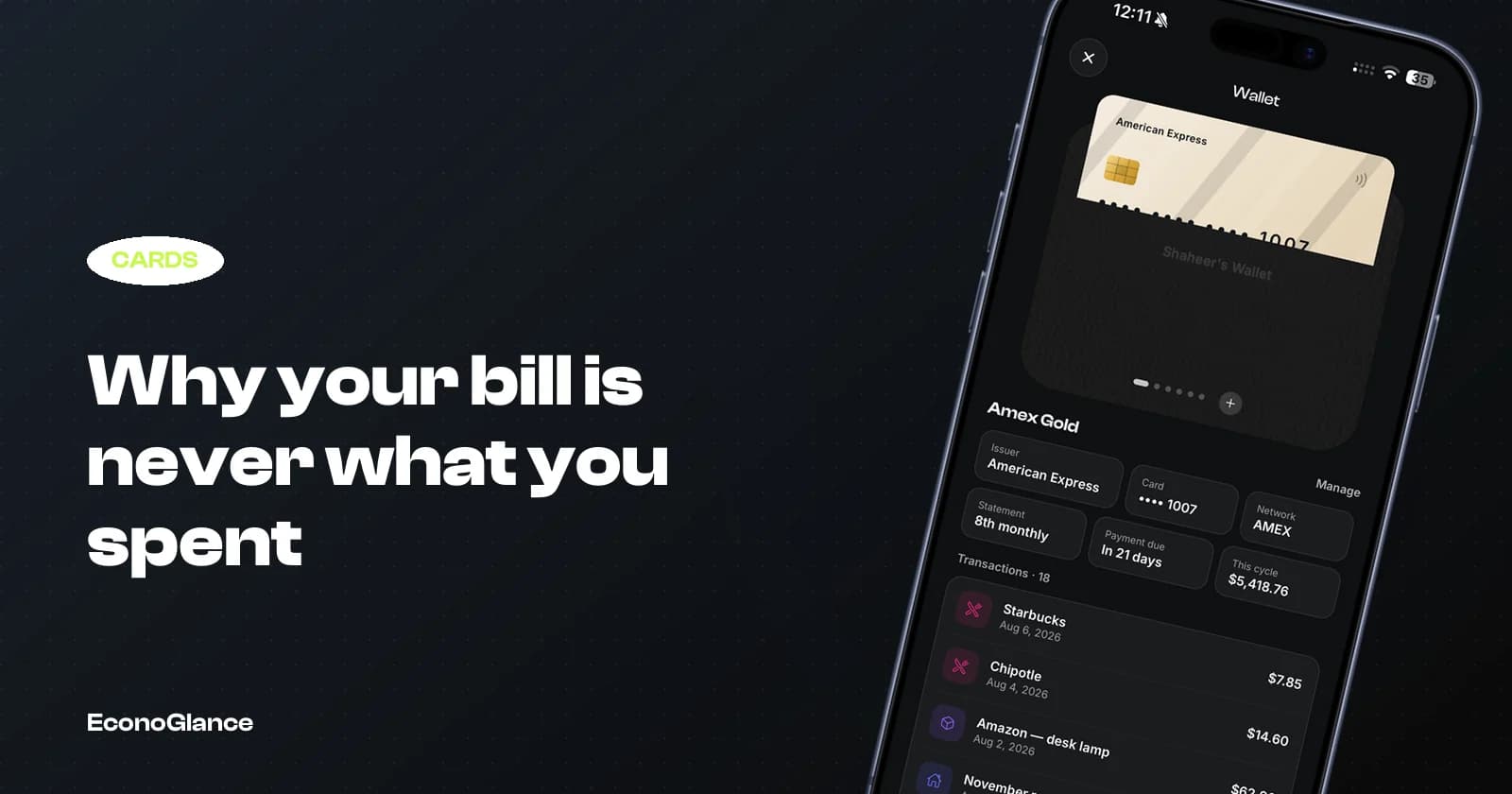
EconoGlance shows the current cycle total per card once you set the statement day, along with how far through the cycle you are, so a large purchase late in a cycle does not become a surprise. See tracking which card paid for what.
The due date discipline
Interest on credit cards is expensive enough that this is the single most valuable habit in this article.
Pay the statement balance in full by the due date and you generally pay no interest on purchases. Miss it, even by a day, and interest can apply to the whole balance, sometimes retrospectively from the purchase dates.
- Set a reminder several days before the due date, not on it
- Pay the statement balance, not the current balance, unless you want to clear everything
- Never rely on the direct debit alone if it is set to the minimum, which is designed to keep you in debt
That last point is worth dwelling on. A minimum payment direct debit protects your credit record and almost nothing else. It is the most expensive way to hold a balance.
The grace period
The gap between the statement date and the due date is your interest free window, and it is not the same as a payment holiday.
It typically applies only if you paid last month's statement in full. Carry a balance and many cards remove the grace period entirely, meaning new purchases start accruing interest immediately. This is the trap that turns one difficult month into a persistent balance.