Ride fares are small enough that nobody chases them and frequent enough that they add up. A group that takes four cabs a weekend is moving real money around invisibly.
This guide covers the fair ways to divide one, including the case the ride apps handle worst.
Why the in-app split often is not there
Fare splitting inside ride apps has been added, removed and reintroduced in different markets over the years.
Whether you see it depends on your country, your app version and sometimes the specific ride type. It also requires everyone to be in the same app with a payment method attached, which is exactly the condition that fails when one person in the group is visiting from abroad.
So the practical answer is to treat the fare like any other shared expense, and split it wherever you already track the rest.
Everyone rides the whole way: split equally
The simple case, and the most common one.
Four people, one destination, one fare. Divide by four. Do not overthink it and do not try to account for who sat in the front.
The only refinement worth making is who pays next time. If the same person always books, they are carrying the cost of the group's convenience until settle-up day. Rotating the booking is easier than rotating the maths.
Staggered drop-offs: split by leg
This is the case people get wrong, usually by trying to divide by distance.
Distance-based splitting sounds fair and is usually not, because the fare includes a base charge and time as well as distance. The cleaner method is to split each leg of the journey among the people who were still in the car.
| Leg | In the car | Leg cost | Each pays |
|---|---|---|---|
| Start to first drop | 4 people | 12.00 | 3.00 |
| First to second drop | 3 people | 9.00 | 3.00 |
| Second to final drop | 2 people | 6.00 | 3.00 |
| Totals | 27.00 | First out pays 3.00, last out pays 9.00 |
You do not need the exact cost of each leg. Estimate it by time or by rough distance and split accordingly. Anyone arguing about the difference between an estimated leg and a precise one has misunderstood the size of the stakes.
The airport run exception
Airport fares are large enough to be worth a little more care, and they usually have a fixed component.
If one person is dropped at a terminal and the others carry on into the city, treat the airport leg as the shared portion and the continuation as the remaining riders' own cost. Splitting an entire airport fare four ways when two people carried on for another twenty minutes is a common and quietly expensive mistake.
Log it before you get out
Small fares are the ones that vanish. Nobody chases four dollars, and nobody remembers it on Sunday.
The habit that fixes this is logging the expense while you are still in the car or standing on the pavement. It takes fifteen seconds, and it means the balance is right without anyone having to reconstruct a weekend.
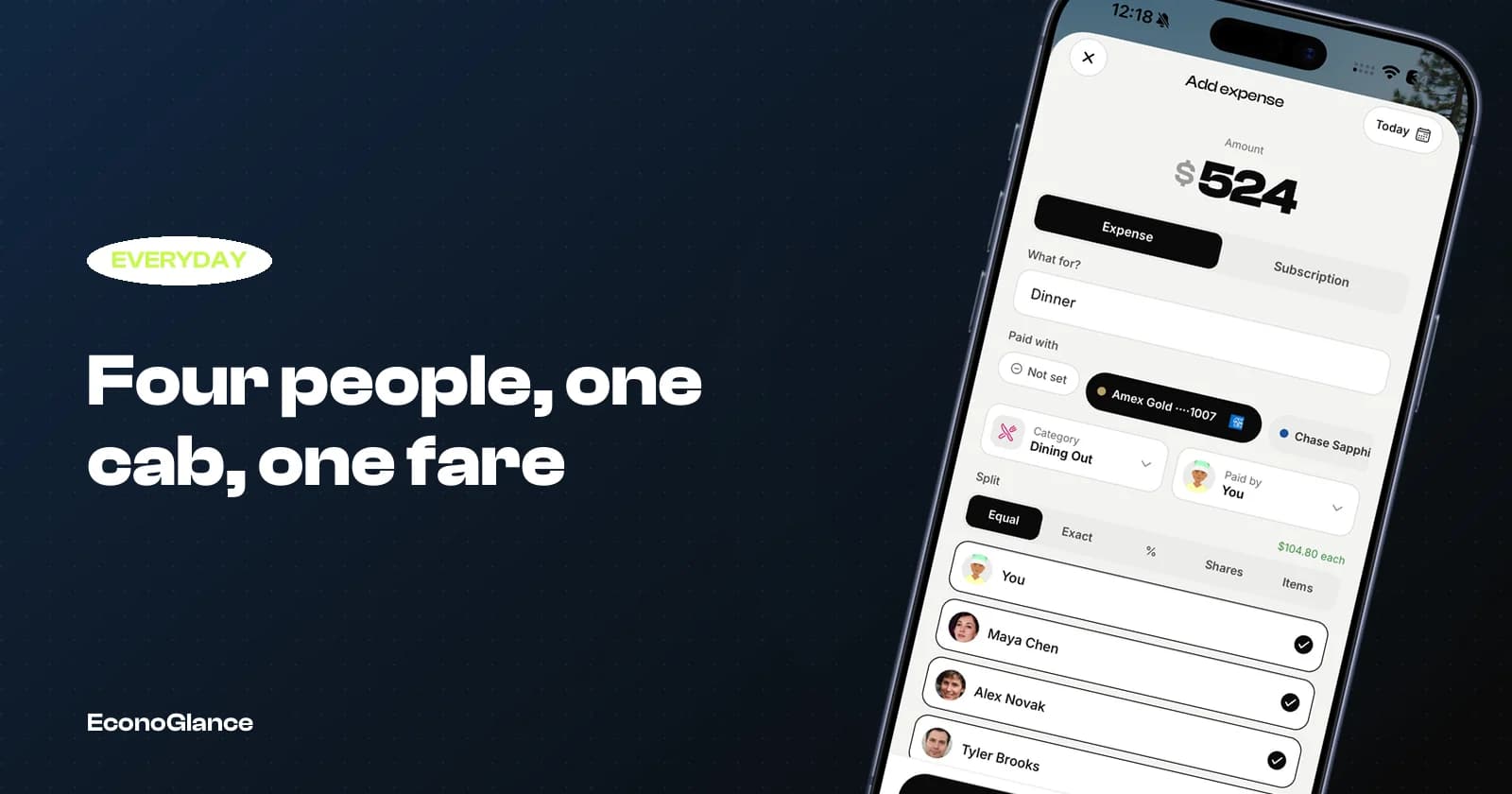
In EconoGlance you can add it in a couple of taps and pick which card paid, which is useful if the ride went on a card you are also tracking. See expense tracking, or tracking which card paid for what.
The etiquette
Two small rules make ride splitting painless in a group that travels together often.
- Whoever books, announces the total straight away rather than waiting to be asked
- Anyone getting out early offers their share before they leave the car
Both put the awkward moment at the start, when it is a five second transaction, rather than at the end of a trip when it has become a conversation.