There is a good reason groups fall back on a kitty. On a trip you make twenty tiny transactions a day, and splitting each one is absurd.
Everyone puts in the same amount, one person holds it, and the group spends from it. The problem is never the idea. It is that the record lives in one person's head.
What a kitty is genuinely good for
Use it for the high frequency, low value, everyone-benefits spending.
- Coffees, snacks, water, street food
- Local transport, metro tickets, short taxi hops
- Tips, small entry fees, parking
- Groceries for a shared apartment
Keep it away from anything large or anything not everyone joins. A 300 dinner or an activity half the group skipped should be a normal split, not a kitty withdrawal, because those are exactly the amounts people remember and query later.
The two numbers that keep it honest
A kitty only needs two records, and skipping either is what breaks it.
| Record | What it is | Why it matters |
|---|---|---|
| In | Who contributed how much, and when | Determines everyone's share of any leftover |
| Out | What the kitty paid for | Proves the money went on the group, not on one person |
| Balance | In minus out | The number people actually want to know |
The holder does not need to justify every coffee. They do need the total spent to be visible, because the gap between what people think is left and what is actually left is where trust erodes.
Log the kitty as a real expense
The cleanest way to handle this in an expense app is to treat contributions and spending separately.
When everyone contributes, log it as each person paying in. When the kitty buys something, log it as an expense split across the group, paid by the kitty holder. Their balance then correctly shows them holding group money rather than having spent their own.
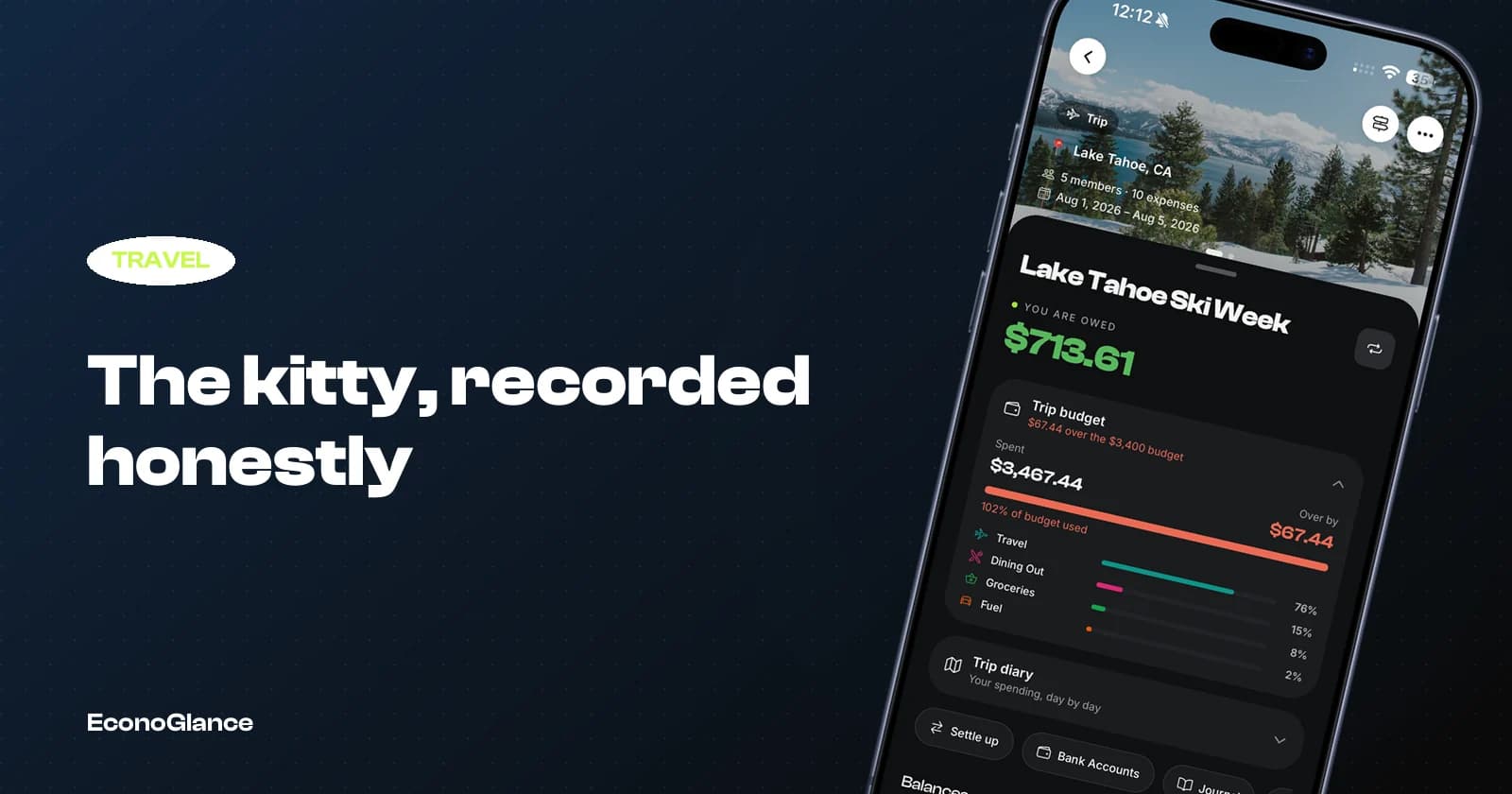
That way the app answers the two questions people ask: what is left, and who is up or down at the end. EconoGlance handles this as ordinary expenses within a trip group, alongside the trip budget. See travel expenses.
Choose the holder deliberately
The holder should be whoever is most likely to be present and paying, not whoever is best with money.
In practice this is the person who tends to walk to the counter. If the holder is elsewhere every time the group buys something, everyone else starts fronting cash and you now have a kitty plus a set of side debts, which is worse than either alone.
Name a backup with the same access. Phones get lost, people get ill, and a fund only one person can reach is a single point of failure in a foreign country.
Top up on a threshold
Do not wait until it is empty. Agree a level, say twenty percent left, at which everyone puts in the same amount again.
Running out mid-meal forces an improvised split at the worst moment, and those are the transactions that never get recorded properly. A threshold turns topping up into a scheduled, boring event.
Settling the leftover
There will be money left, and this is the last chance for the trip to end badly.
Split the remainder in proportion to what each person contributed, not equally, unless everyone put in the same. If contributions were uneven and you split the leftover equally, you have quietly transferred money from the bigger contributors.
For small remainders, the usual custom is to put it towards the final meal, which is both fair and a nicer ending than a set of four euro transfers.
For the rest of the end of trip process, see the practical guide to settling up.