To split gas money on a road trip, work out the fuel cost (distance × fuel use × fuel price), add tolls and parking, and divide by the number of people in the car. Most groups include the driver in the split. If the car belongs to one person, many groups also add a small amount per kilometre or mile for wear on the car. The calculator does the fuel part in metric or US units.
Method: 1,200 km × fuel use ÷ 100 = 96.0 litres, × fuel price, plus tolls and parking, divided by 4 people. Fuel use on the open road is usually a little better than the figure a car shows in town.
The basic formula
Two versions, depending on where you are.
| Units | Fuel needed | Example |
|---|---|---|
| Kilometres and litres | km × litres per 100 km ÷ 100 | 600 km × 8 ÷ 100 = 48 litres |
| Miles and US gallons | miles ÷ miles per gallon | 350 miles ÷ 28 = 12.5 gallons |
Then multiply by the fuel price. For a round trip, double the distance. A trip of 600 km each way, 1,200 km in total, at 8 litres per 100 km uses 96 litres. At Rs 270 a litre that is Rs 25,920, or Rs 6,480 each for four people. Use the price you actually pay at the pump on the day, not an average.
Does the driver pay?
There are two fair answers. Pick one before you leave.
- Everyone pays equally, driver included. Simple, and fair when the driver would have driven anyway.
- The driver rides free on fuel. Fair when the driver is giving up their time and their car is taking the wear. The calculator has a switch for this.
What is not fair is deciding at the end. If the driver expected a free ride and everyone else expected an equal split, the argument happens at the last fuel stop, when everyone is tired.
Wear and tear on the driver's car
Fuel is not the only cost of driving. Tyres, servicing and depreciation add up, and they fall on whoever owns the car.
In the US, the IRS business standard mileage rate is a useful benchmark for the full cost of running a car. For 2026 it is 72.5 cents a mile from January to June and 76 cents a mile from 1 July, an unusual mid-year increase. That rate covers fuel and everything else, so it is a ceiling, not a target, for friends sharing a trip.
A common middle ground is to split fuel, tolls and parking equally and then add a small per-mile or per-kilometre amount for the owner, or simply have the passengers cover the driver's share of fuel. Whatever you choose, keep it small enough that nobody feels they are paying for someone's car.
Tolls, parking and the other costs
Split these like fuel: equally among everyone in the car at the time.
| Cost | How to split |
|---|---|
| Fuel | Equally among people in the car, or driver free if agreed |
| Tolls and motorway fees | Equally among people in the car |
| Parking at the destination | Equally among people using the car there |
| Car wash or interior cleaning after the trip | Equally |
| Fines for speeding or parking | The driver, unless the group caused it |
| Repairs from normal driving | Agree in advance. Usually the owner, from the wear contribution |
Someone joins halfway
Split by leg, not by trip.
Break the trip into legs at each pickup or drop-off. Split each leg's fuel among the people in the car for that leg. If a 1,200 km round trip has a friend in the car for only the last 400 km, the first 800 km is split among four people and the last 400 km among five. In practice, many groups round this off and ask the late joiner for a fair flat amount, which is fine if everyone agrees.
Electric cars
The same logic applies, with charging instead of fuel.
Use the cost of the charging sessions on the trip, which most charging apps record. Home charging before the trip is harder to measure. A reasonable approach is to estimate it from the car's energy use per 100 km or per mile and your home electricity rate.
Tracking it on the road
Road trips generate lots of small costs paid by different people, which is exactly where splitting goes wrong.
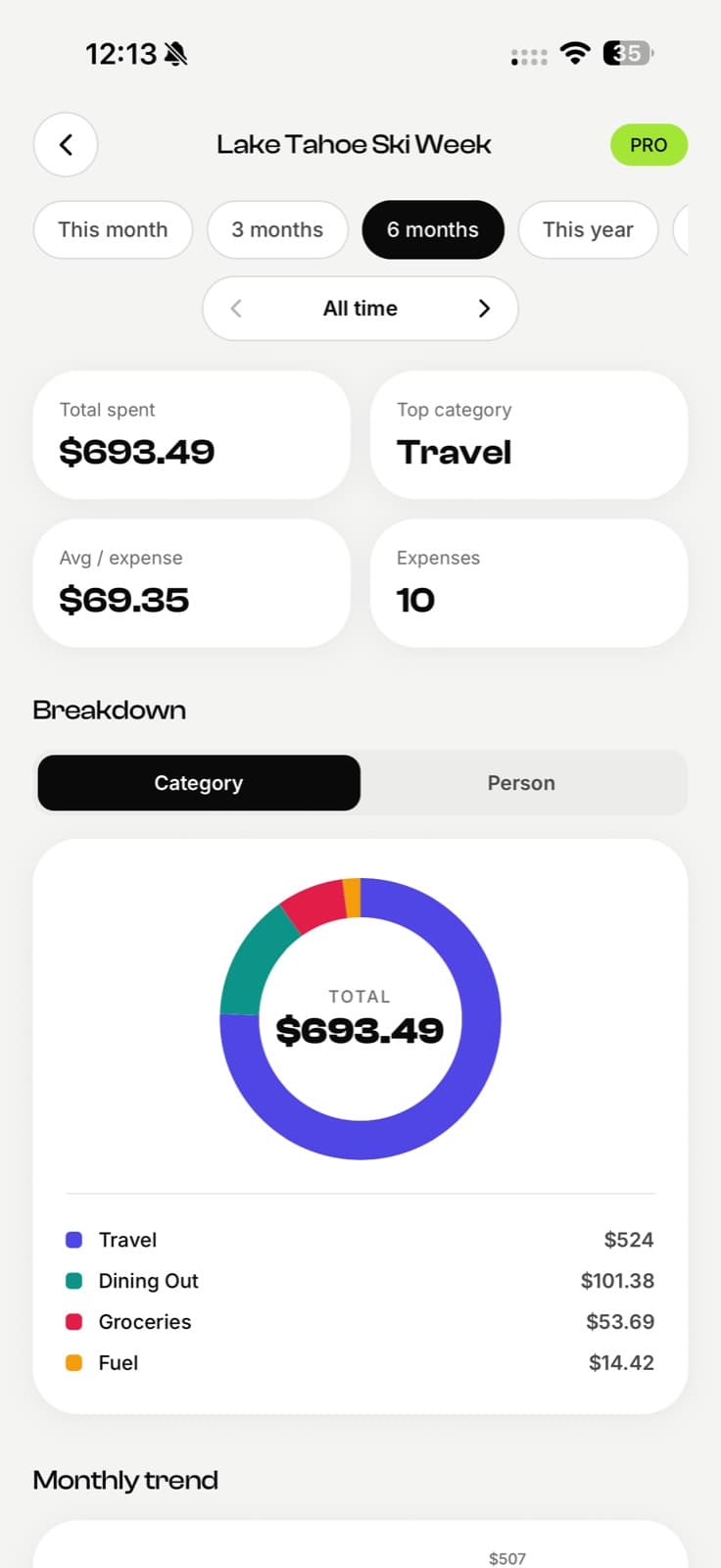
Add each fuel stop, toll and parking fee to a trip group in EconoGlance as it happens, with whoever paid as the payer. Each expense can be split among only the people in the car for that leg. At the end, the app shows who owes whom and the fewest payments to settle it.
For the rest of the trip's money, read how to split expenses on a group trip. If one person owns the car and the group shares it regularly, shared car costs: fuel, insurance and repairs covers the ongoing version.