The fairest way to split wedding costs between two families depends on the shape of the wedding. For a multi-day wedding with separate events, each family usually pays for the events it hosts. For a single reception, splitting by guest list, so each side pays for the people it invites, is the most defensible. Costs that serve everyone, such as photography or the venue hire, are split by an agreed percentage. Whatever the method, agree it before the first deposit.
Weddings are expensive almost everywhere. In the US, The Knot's 2026 Real Weddings Study found the average 2025 wedding cost $34,000, about $292 per guest. Multi-day South Asian weddings can involve several separate events, each with its own venue, catering and guest list. The bigger the numbers, the more a clear agreement is worth.
Method 1: By event
When a wedding has several events, each family takes responsibility for its own.
In many Pakistani weddings, for example, the bride's family traditionally hosts the mehndi and the baraat reception, and the groom's family hosts the walima. Each family then pays for the events it hosts, chooses its own scale and invites its own guests. Shared items, such as the couple's clothes or a photographer covering every event, are split separately.
| Event | Traditionally hosted by | Paid by |
|---|---|---|
| Mehndi | Bride's family (each side may hold its own) | The host family |
| Baraat reception | Bride's family | Bride's family |
| Walima | Groom's family | Groom's family |
| Photographer across all events | Shared | Agreed shares |
Traditions differ between regions and families, and many couples now change them. Treat the table as the common starting point, not a rule. The strength of this method is that each family controls its own costs. Its weakness is that one family's event can be far more expensive than the other's.
Method 2: By guest list
For a single reception, the guest list is the biggest driver of cost, so splitting by guests is the most objective method.
Work out the per-guest cost of everything that scales with guests: catering, venue capacity, invitations, favours. Each side then pays for its guests. Fixed costs, such as the photographer, the couple's outfits and decor, are split separately by agreed shares.
| Bride's side | Groom's side | Couple's friends | |
|---|---|---|---|
| Guests | 60 | 40 | 20 |
| Per-guest costs at $180 | $10,800 | $7,200 | $3,600 |
| Share of $9,000 fixed costs (agreed 40/40/20) | $3,600 | $3,600 | $1,800 |
| Total | $14,400 | $10,800 | $5,400 |
In this example the per-guest cost of $180 covers catering and anything else that grows with the guest list, and the couple pays for their own friends. Together the three sides cover the $30,600 total. Nobody can argue that they paid for someone else's 30 cousins.
Method 3: By agreed shares
Some families simply agree percentages, for example 40% each family and 20% the couple, and apply them to everything.
It is simple to run: every bill is split the same way. It works best when the families are of similar means and similar guest lists. When guest lists are very different, it means one family is paying for the other's guests, which is where the guest-list method is fairer.
Method 4: By ability to pay
Sometimes the honest answer is that one family can contribute much more than the other.
That is fine, if it is said plainly and agreed, and if the contributing family does not expect control of the whole wedding in return. A family contributing more often expects more say. Agree up front which decisions belong to the couple regardless of who pays.
The conversation, in order
Have it early, with both families, before anything is booked.
- The couple agrees their own priorities and budget first.
- Agree the overall budget and the number of events.
- Choose the method: by event, by guest list, by shares or a mix.
- Agree who pays deposits, and by when, since deposits are often due months ahead.
- Agree which decisions belong to the couple whoever pays.
- Put it in writing and share it with everyone involved.
Deposits, cash and the record
Wedding spending is spread over many months and many people, which is why it gets lost.
Keep one shared record of every booking: the vendor, the total, the deposit, who paid it and which method it falls under. Families who pay in cash should still be recorded. A shared record turns 'I think your side still owes for the flowers' into a line everyone can see.
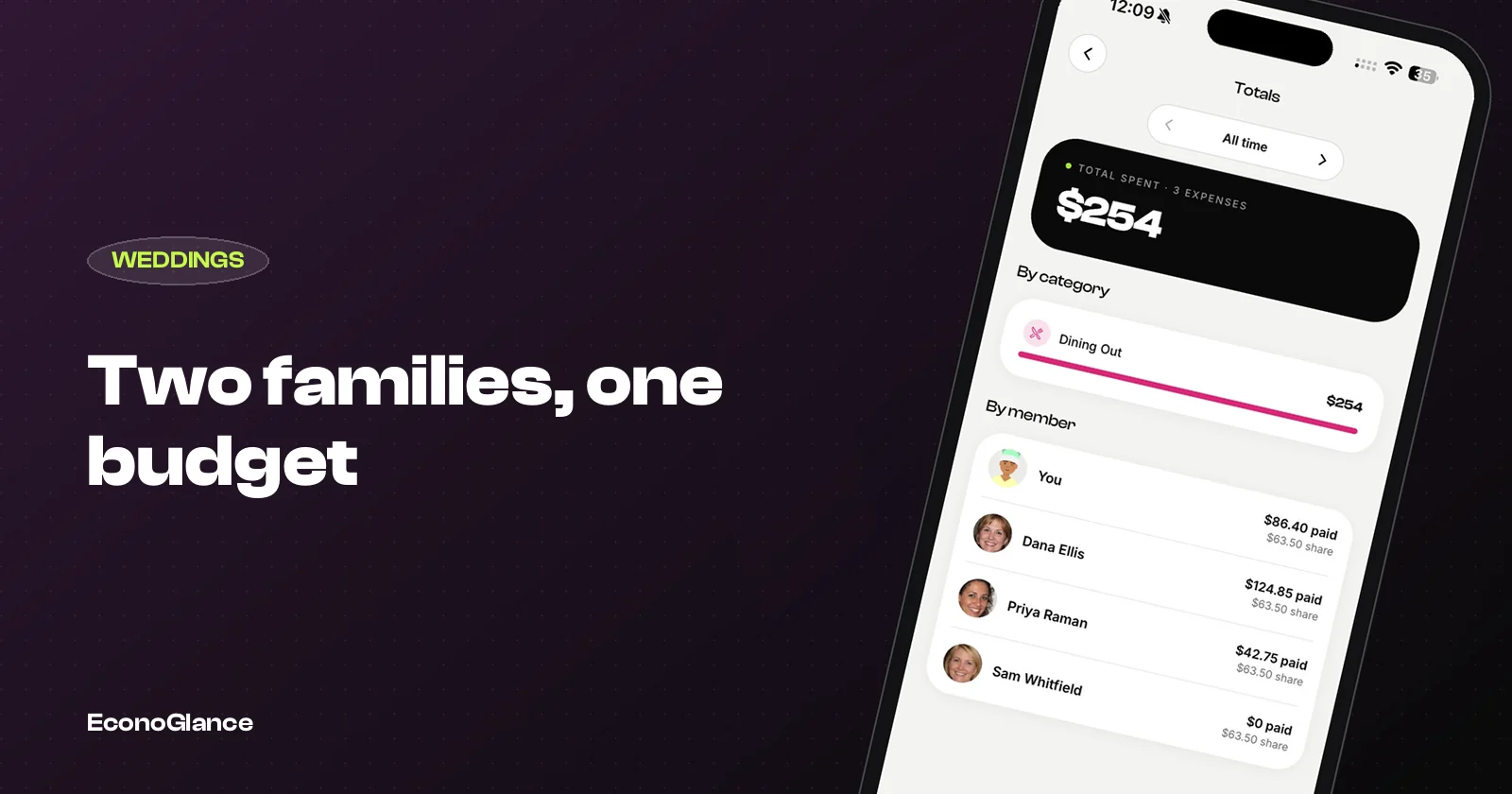
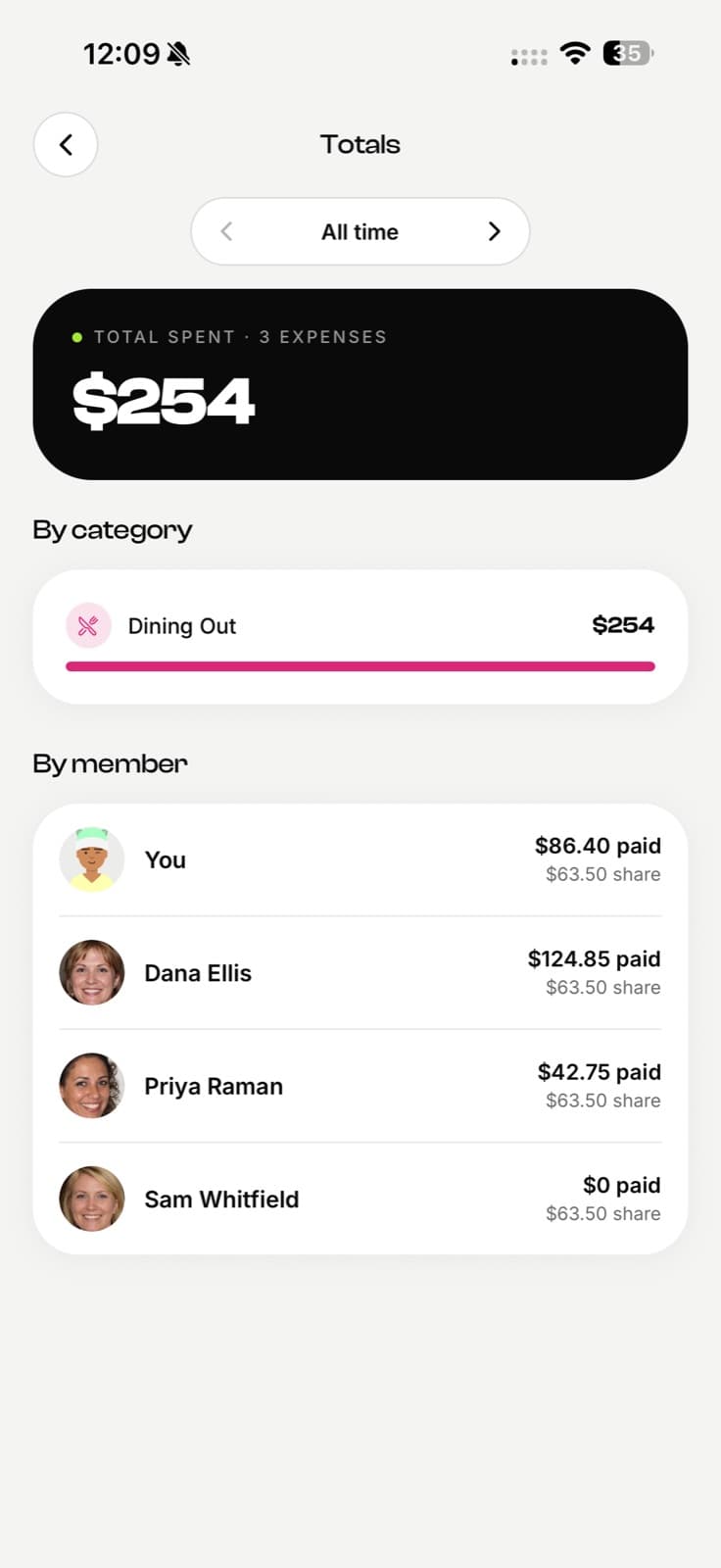
In EconoGlance, create a group for the wedding with the couple and a representative from each family, and add each booking as it is paid, split by the agreed method: exact amounts for guest-based costs, percentages for shared ones. The balance shows what each side has paid and owes at any point, and every expense has a comment thread for questions about it.
For the related question of gifts, read group gifts: how to collect money without chasing anyone, and if friends are organising the pre-wedding party, how to split bachelor and bachelorette party costs.