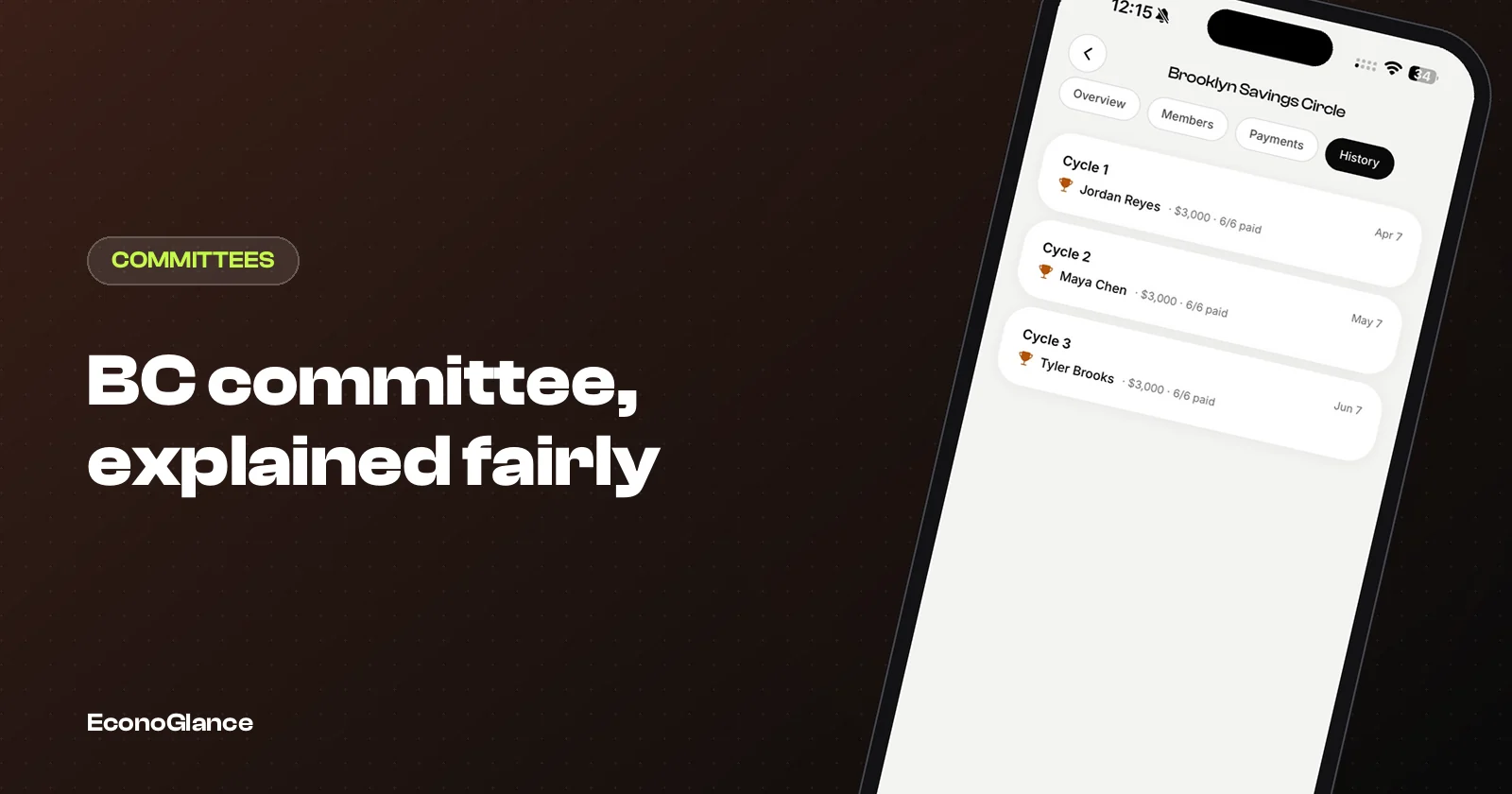
A BC committee is a rotating savings group. A set number of members each pay the same amount every month into a pot, and each month one member receives the whole pot, until every member has received it once. In Pakistan the same arrangement is called a committee, a kameti or a BC, often written beesee. They are one thing with several names.
BCs are very common. Oraan, a Pakistani fintech built around committees, reported in its own 2018 research that 41% of Pakistanis take part in one. Treat that as one company's estimate, but it matches what most families will tell you: nearly everyone has been in a BC, or knows someone running one.
How a BC round works, step by step
Take a BC of 12 members paying Rs 10,000 a month. The pot is Rs 120,000 and the BC runs for 12 months.
- Before month one, members agree the amount, the number of members, the collection date and how the recipient is chosen each month.
- Each month, every member pays Rs 10,000 to the organiser by the collection date.
- Once all payments are in, the month's recipient is decided: by turn, by draw or by bidding.
- The recipient receives Rs 120,000 and confirms receipt.
- Repeat until all 12 members have received the pot once. The BC then ends, or starts a new cycle.
Nobody earns interest in a plain BC. Every member pays in Rs 120,000 and receives Rs 120,000. The benefit is discipline for the late receivers and an interest-free advance for the early ones.
Draw BC or bidding BC?
The biggest difference between BCs is how the recipient is chosen.
| Draw BC | Bidding BC | |
|---|---|---|
| How the recipient is chosen | Names drawn each month from those not yet paid | Members bid a discount to receive the pot early |
| What the recipient gets | The full pot | The pot minus their winning bid |
| Monthly payment | Always the same | Lower in months with a winning bid, because the discount is shared |
| Suits | Groups with similar needs | Groups where some members need money urgently |
| Main risk | Claims that the draw was rigged | Errors in tracking changing payments |
In a bidding BC, if a member bids Rs 12,000 to take the Rs 120,000 pot in month two, they receive Rs 108,000 and the Rs 12,000 is shared by the other 11 members, about Rs 1,091 each off that month's payment. Bidding rewards patience and prices urgency. Some members avoid it because the discount behaves like interest, so agree the method before anyone joins.
The full comparison of fixed turns, draws and bidding, with more worked numbers, is in kameti payout order.
Where unfairness comes from
Most BCs end fine. When one does not, the cause is usually one of four things.
- The organiser's turn. Organisers often take the first pot as reward for the work. That is common, but it means the person holding everyone's money has already been paid.
- Unwritten late rules. When a member pays late, nobody knows if the recipient waits, the organiser covers it, or a fee applies.
- Private draws. A draw done by the organiser alone and announced later invites suspicion even when it is honest.
- Strangers. Large BCs run by someone collecting from many unconnected people are where most committee fraud happens.
A fairness checklist for any BC
Agree these before the first payment.
| Question | A fair answer |
|---|---|
| Who goes first? | The member with the most urgent need, or the draw. Not automatically the organiser. |
| What if someone pays late? | A fixed grace period, then a set late fee, written down. |
| How is the draw done? | In front of every member, in person or on a video call. |
| What if someone drops out before their turn? | They are repaid what they paid, at the end of the cycle. |
| What if someone stops paying after their turn? | The organiser and group agree the recovery steps in advance. |
| Who can see the payments? | Every member, every month. |
If a member does stop paying, the options are covered in what happens when a kameti member stops paying.
How big should a BC be?
Smaller is safer.
Every extra member adds a month to the cycle and another person who might stop paying. Ten to twelve members, all known to at least two others in the group, is a common and manageable size. If you want to save more, raise the monthly amount rather than the number of strangers.
Running a BC in EconoGlance
EconoGlance's kameti feature is a BC with the rules written into it.
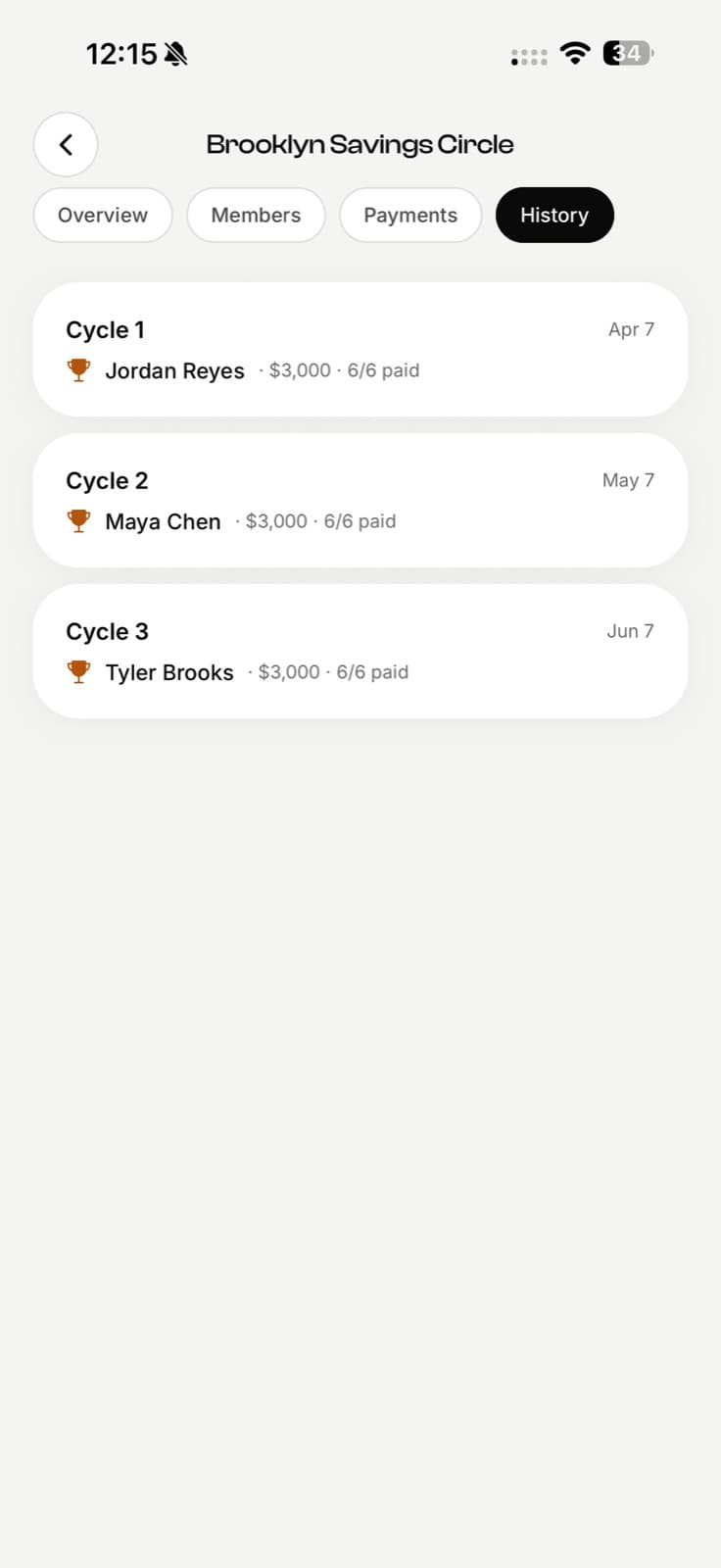
You set the amount, frequency, number of members, grace period and late fee once. You choose how each recipient is picked: fixed order, a lucky draw that every member sees, manual choice by the organiser, a quiz, or emergency priority where members vote on an early turn. EconoGlance does not run bidding, so a bidding BC records each winner manually. Every member sees the agreement, the payments and the history of who has received the pot.
Organising one BC is free. For the full background on committees, read the kameti guide and how to run a committee without losing track.