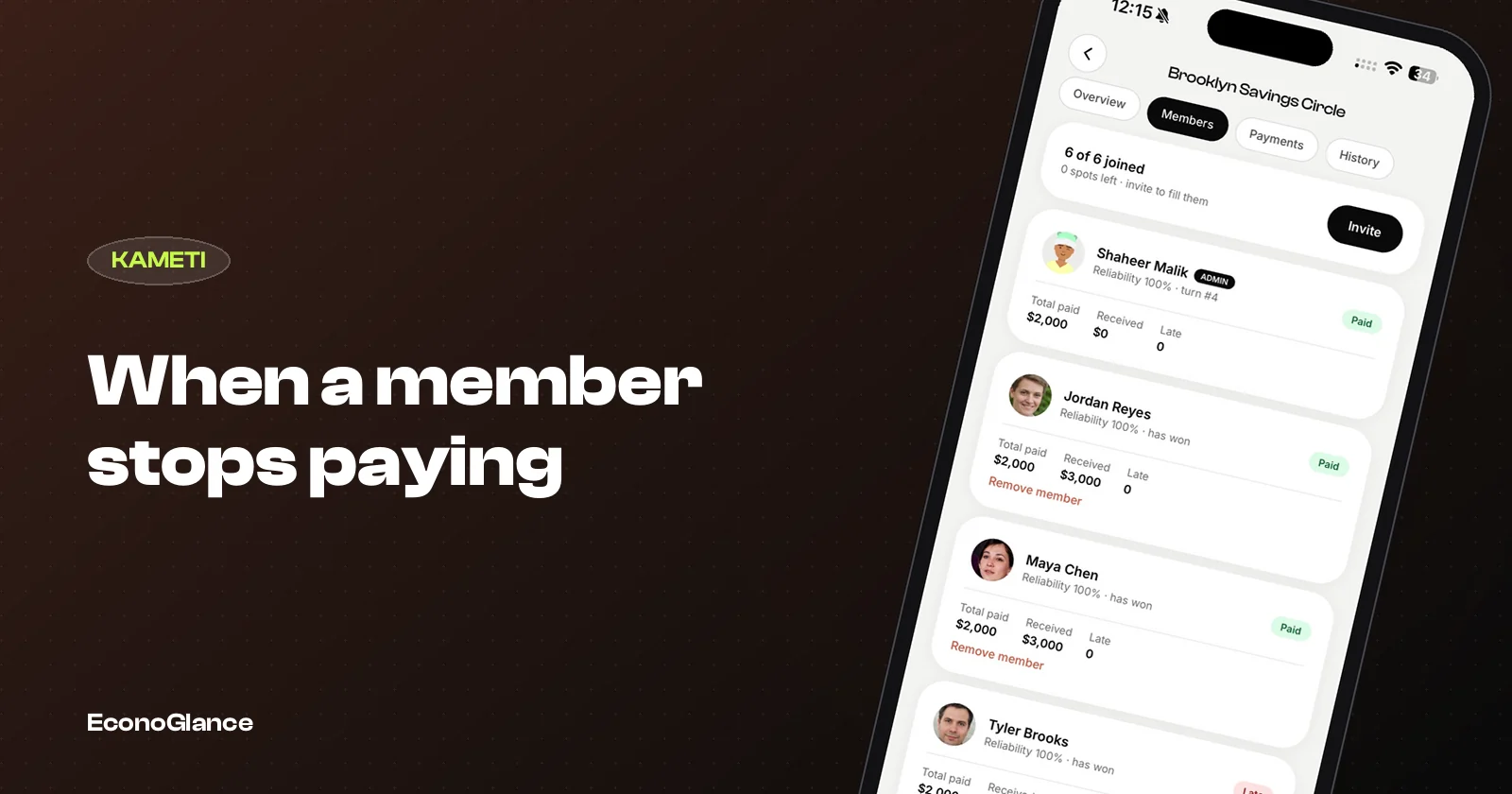
When a kameti member stops paying, the outcome depends almost entirely on whether they have already received the pot. If they have not, the group has their money, not the other way round, and the problem is administrative. If they have, the member owes the group the payments they have not made, and the members still waiting for their turn carry the loss unless someone covers it.
This guide covers both cases with numbers, the options in each, and the rules that stop it happening. It uses a ten-member kameti paying Rs 20,000 a month, so the pot is Rs 200,000.
First, find out why
Most missed payments are not fraud.
Salary delays, a medical bill, a lost job. A member who explains early and offers a date is in a different position from one who stops answering calls. Talk privately before talking to the group. Many problems end with a short delay and a catch-up payment, which a grace period exists to absorb.
Case 1: The member has not received the pot
Say Hamza has paid four months, Rs 80,000, and stops in month five. His turn was due in month eight.
The group is not out of pocket. Hamza has lent the group Rs 80,000. The options:
| Option | How it works | Effect on the group |
|---|---|---|
| Repay at the end | Hamza leaves. He gets his Rs 80,000 back after the last round. | Pots from month five are Rs 180,000, one share short |
| Replace him | A new member takes over Hamza's remaining payments and turn, and pays him back the Rs 80,000 he paid in. | No change for anyone else |
| Organiser covers the gap | The organiser pays Hamza's share until his slot is filled. | No change, but the organiser carries the cost |
Replacement is usually the cleanest. Whatever you choose, write down exactly what Hamza is owed and when he will receive it, and share it with the group.
Case 2: The member has already received the pot
Now say Hamza took the Rs 200,000 pot in month two and stops paying in month five. He has paid four months, Rs 80,000, and owes six more, Rs 120,000.
Those Rs 120,000 belong to the members whose turns come later. If nothing is done, the remaining pots are each Rs 20,000 short. That is the real cost of default, and it lands on the most patient members.
| Option | How it works | Who bears the cost |
|---|---|---|
| Payment plan | Hamza agrees smaller payments over a longer period | Later recipients wait, but are made whole |
| Guarantor pays | The person who vouched for Hamza covers the payments | The guarantor |
| Organiser covers | The organiser fills the gap and recovers it from Hamza | The organiser, until recovered |
| Shortfall shared | Remaining pots are reduced, and the group pursues the debt | Every remaining member, equally |
| Mediation, then legal advice | Family or community elders mediate. A signed agreement helps if it goes further. | Time and goodwill |
A payment plan is the most common resolution, and the best one when the member is willing. If they are not, mediation through people both sides respect usually works better than threats. Formal legal action is a last resort, it varies by country, and it is far stronger with a written, signed agreement and a clear payment record than without them.
The rules that prevent it
Default risk cannot be removed, but it can be placed where it does least harm.
- Order by trust. Members you know least well take the later turns, so they have paid in before they receive anything.
- Use a guarantor for anyone who wants an early turn and is not well known to the group.
- Agree a grace period, for example five days, then a fixed late fee.
- Write down what happens if someone drops out before their turn and after it.
- Keep every payment visible to every member, so a missed payment is noticed in days, not months.
The full set of rules is in the kameti rules that prevent every common dispute, and the effect of order on risk is explained in kameti payout order.
How to talk about it with the group
The way an organiser handles a default decides whether the kameti survives it.
- Tell the group early and factually: who has missed what, and what has been agreed.
- Do not share private reasons the member told you in confidence.
- Present the options and let the group decide where the agreement does not already cover it.
- Record the decision in writing and update the record the same day.
How EconoGlance helps catch it early
Most defaults that become disputes were visible for weeks before anyone said anything.
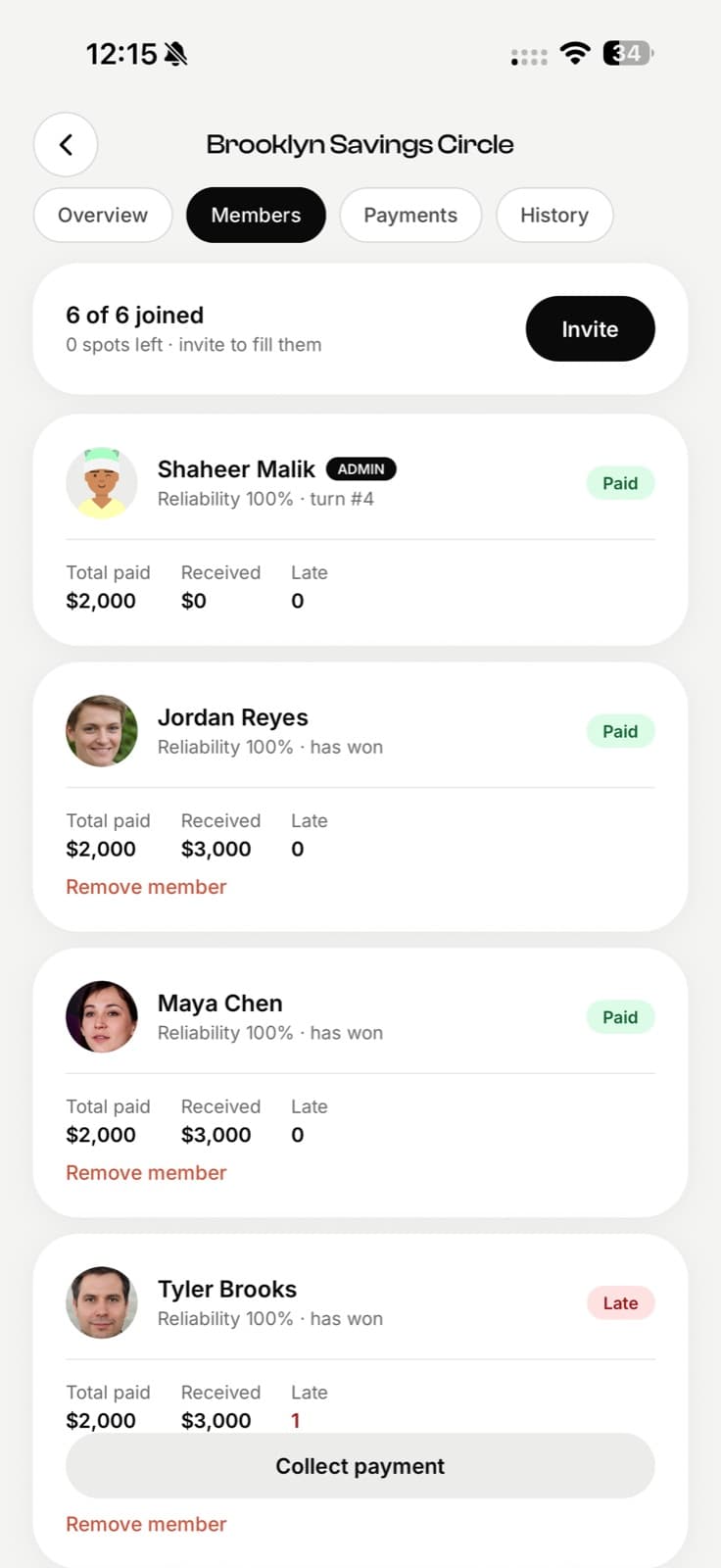
In EconoGlance, each circle has a grace period and an optional late fee. A payment that passes the grace period is marked late for every member to see, and members get reminders before the collection date. Each member's paid, received and late totals sit on one screen, so the organiser does not have to work out who owes what. The organiser can also remove a member and record what they are owed.
One circle is free to organise. Keep a paper copy too, using the free kameti record template.