Overseas Pakistanis run kametis in three ways. A committee among colleagues in the Gulf, paid in dirhams or riyals. A family kameti back in Pakistan, paid in rupees from abroad. Or a mixed group with members in Dubai, Riyadh and Karachi. The idea is the same in all three: everyone pays a fixed amount each month and one member takes the whole pot each round. The risks are not the same, and that is what this guide is about.
The scale is real. Pakistan received a record $38.3 billion in workers' remittances in the 2024-25 fiscal year, with Saudi Arabia ($9.78 billion) and the UAE ($8.81 billion) the two largest sources, and inflows rose again to about $41.6 billion in 2025-26 according to State Bank of Pakistan data. A large share of that money moves through family obligations, and kametis are one of the oldest of them.
The three setups compared
Decide which one you are running before you agree any rules.
| Setup | Currency | Main risk | The rule that fixes it |
|---|---|---|---|
| Colleagues in the Gulf | AED or SAR | A member who took the pot leaves the job or country | Members who may leave go last |
| Family kameti in Pakistan | PKR | Exchange rate moves and late transfers from abroad | A family member at home acts as your representative |
| Mixed group across countries | One agreed currency | Arguments about who absorbs exchange-rate changes | Each member pays the fixed amount in the pot currency |
Setup 1: A committee among colleagues in the Gulf
This is the most common Gulf kameti: ten or twelve people from the same company, building or community, each paying the same amount on salary day.
It works well because everyone is paid on a predictable date and the group meets every day. It has one risk that committees in Pakistan rarely face. Jobs in the Gulf are tied to residency, so a member can lose a job, have a visa cancelled and leave the country within weeks. If that member has already received the pot, the rest of the group is left holding the debt.
- Put members on short or uncertain contracts in the last turns. A member who has not yet received anything owes the group nothing if they leave.
- Set the collection date three to five days after your company's salary day, not on it. Salaries arrive late often enough to matter.
- Agree in advance what happens if someone leaves before their turn: they get back exactly what they paid, at the end of the cycle, not immediately.
- Never ask for a passport, an ID card or any document as security. Hold nothing but the written agreement.
Keep these committees among people you know. A committee organised by a stranger who collects from many unconnected people is the shape most committee fraud takes, in the Gulf and at home.
Setup 2: Paying into a family kameti back home
Many overseas Pakistanis stay in a kameti run by a mother, aunt or sibling in Pakistan, often as the main way to save for a family wedding or a plot.
Two things change when you pay from abroad. The amount is fixed in rupees but you earn in dirhams or riyals, so your cost moves with the exchange rate. And you cannot be at the draw or hand over cash, so someone has to act for you.
- Name one family member at home as your representative for draws, receipts and signatures, and tell the organiser in writing.
- Transfer a few days before the due date. International transfers can take longer than a domestic one, and a late payment is still late.
- Keep the transfer receipt and send a screenshot to the organiser each month.
- When your turn comes, decide in advance whether the pot stays in Pakistan or comes to you, so it is not decided in a hurry.
On the exchange rate, a simple example. If your kameti is Rs 50,000 a month and the rate is 76 rupees to the dirham, you pay about AED 658. If the rupee weakens to 80, the same Rs 50,000 costs you AED 625. If it strengthens, you pay more. Over a ten-month kameti those movements can add up, so budget for a range, not a single number. Use the rate your bank or exchange house actually gives you, not the one on the news.
Use legal channels only
This is the one part of a cross-border kameti with no flexibility.
Send money to Pakistan through a bank, a licensed exchange house or a Roshan Digital Account, the State Bank of Pakistan's account for non-resident Pakistanis. Do not use hundi or hawala. Informal transfer outside licensed channels is illegal in Pakistan under foreign exchange law, and Pakistan's authorities have been actively cracking down on it. A kameti payment is not worth that risk, and a formal transfer also gives you the receipt your record needs.
Setup 3: A mixed group across countries
Some families run one kameti with members in Dubai, Riyadh, Doha and Karachi.
The single rule that keeps it calm: the pot has one currency, and every member pays the fixed amount in that currency. Whoever earns in a different currency handles their own conversion and their own exchange-rate risk. The moment a group tries to share exchange-rate gains and losses, the arithmetic becomes a monthly argument.
| Decision | Recommended choice | Why |
|---|---|---|
| Pot currency | The currency most recipients will spend it in | Usually PKR for family goals, AED or SAR for Gulf-only groups |
| Collection day | After the latest salary date in the group | Gulf and Pakistani pay dates differ |
| Draws | On a group video call | Members abroad can watch the draw live |
| Proof of payment | Transfer screenshot sent the same day | Removes 'I sent it' disputes across time zones |
Running a Gulf kameti in EconoGlance
EconoGlance was built in Pakistan for exactly this kind of group, and works the same from Dubai, Riyadh or Lahore.
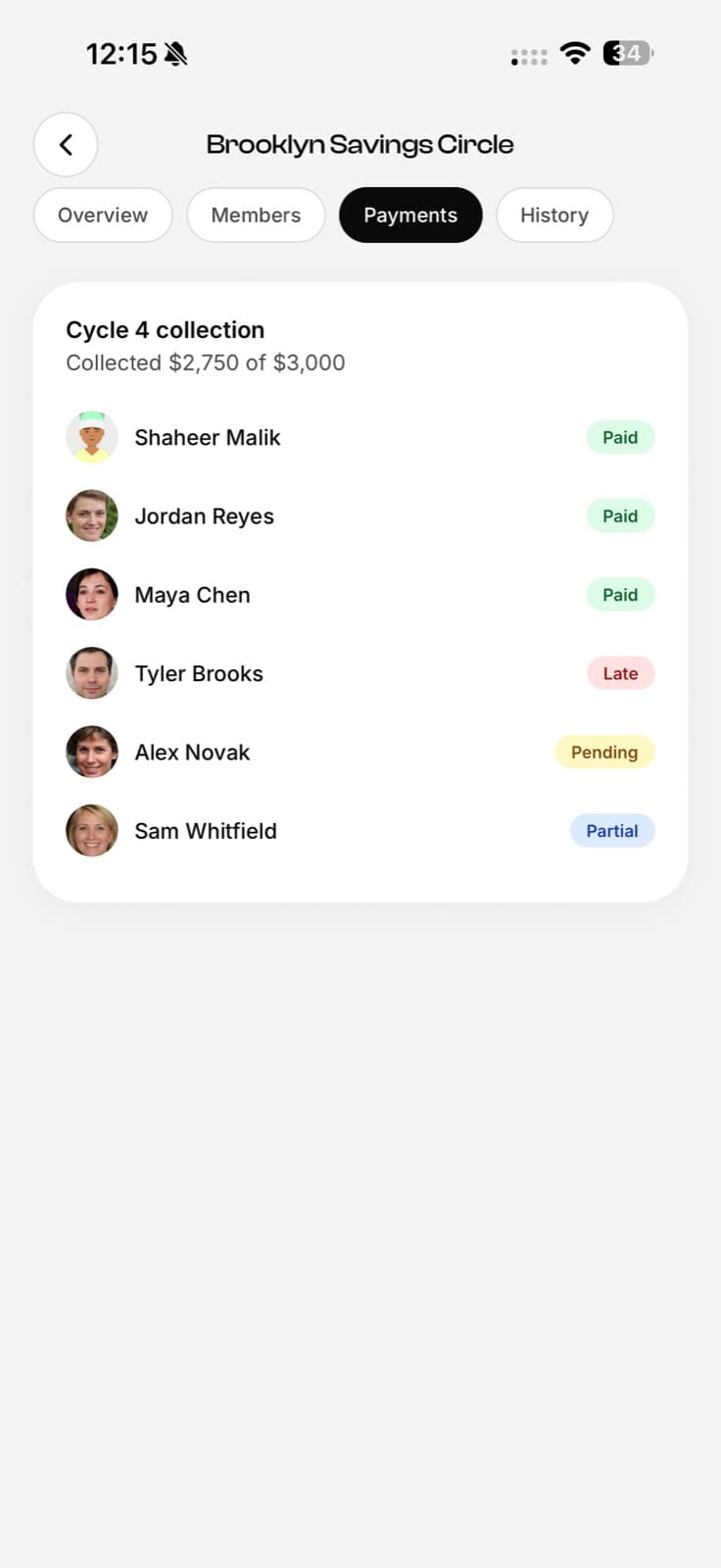
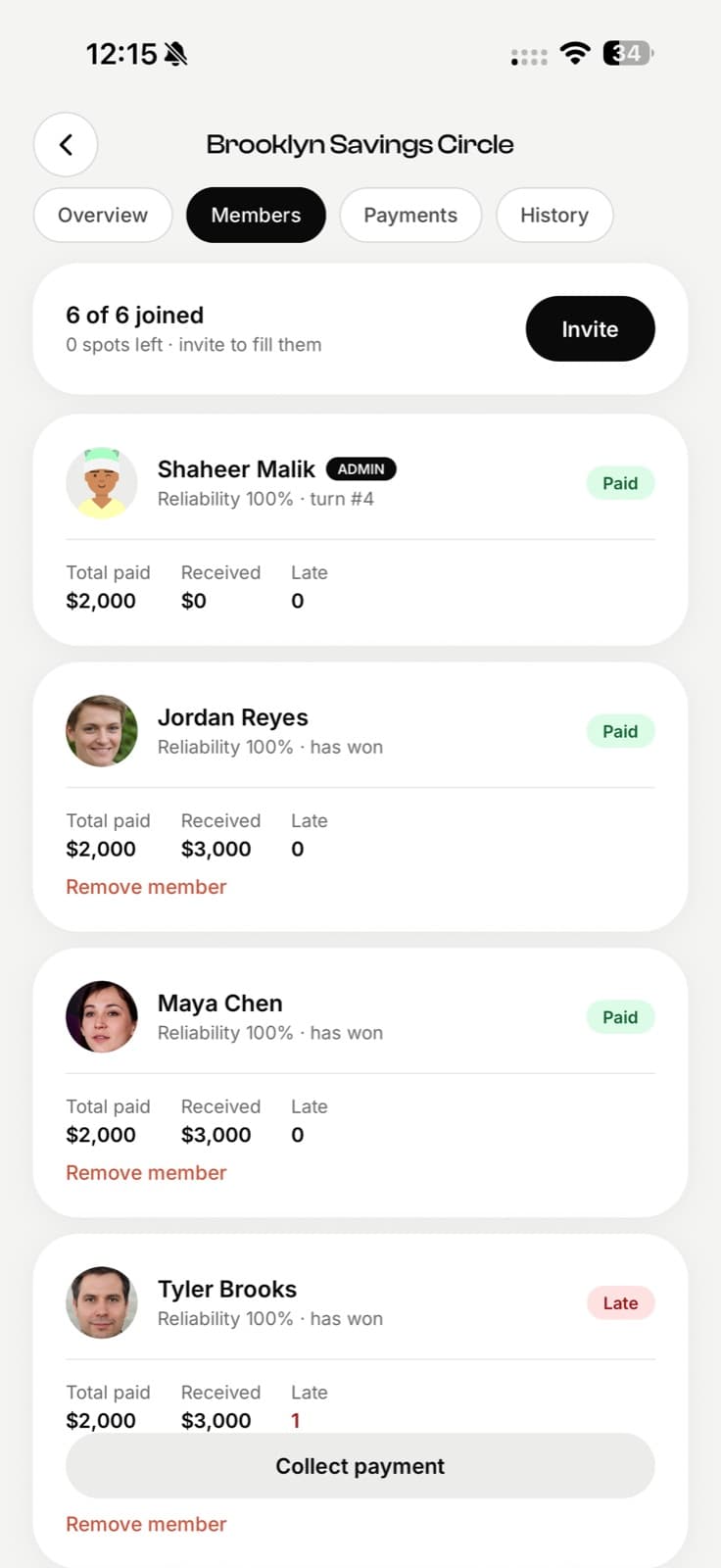
Each circle has its own currency, frequency (weekly, every two weeks or monthly), collection method (bank, wallet or cash), grace period and late fee. Members join by link or QR code from any country. Everyone sees the same payments and the same payout result at the same moment, so a member in Riyadh does not depend on a phone call to know where the kameti stands.
Organising one circle is free, and you can join as many as you like. If you have not chosen a payout method yet, read kameti payout order: draw, bidding or fixed turns, and keep a paper copy with the free kameti record template.