A roommate agreement is a short written document in which flatmates agree how they will share rent, bills, chores and the space itself. It sits alongside your lease with the landlord, which still governs your legal obligations to them. Its job is different: to settle, in advance, the questions flatmates otherwise argue about later.
Two pages covering money, the household and moving out. Print it, or edit the RTF file in Word, Pages or Google Docs.
This template is a practical starting point, not legal advice. Tenancy law varies by country and city, and some places have rules about subletting and the number of occupants. Check your lease allows the arrangement you are writing down.
What the template covers
Twelve sections, grouped into three parts.
| Part | Sections |
|---|---|
| Money | Rent and how it is split, deposit, bills, payment dates and method, late payments, shared supplies |
| The household | Chores, guests and overnight stays, quiet hours, smoking and pets, shared spaces |
| Changes | Moving out and notice, finding a replacement, returning the deposit, resolving disagreements, signatures |
Money: the sections to get exactly right
Be precise here. Vague money terms are the ones that end friendships.
- Rent: the total, each person's share and how it was worked out. If rooms differ in size, say so.
- Deposit: who paid how much, and that each person gets back the same proportion, minus any damage they caused.
- Bills: list every bill, who it is in the name of and how it is split. Equal is fine for most. Note any that are split by use.
- Payment dates: the day each person pays their share, and to whom. Set it a few days before the landlord's due date.
- Late payments: what happens if someone is late. A grace period of a few days and a clear next step is enough.
- Shared supplies: whether cleaning products, toilet paper and cooking basics come from a shared kitty or are bought in turns.
If your rooms are different sizes, use the rent by room size calculator and write the result into the rent section. For bills split by use, see how to split utilities when one roommate uses more.
The household: where most arguments start
Money disagreements are serious but rare. Household disagreements are small and constant.
| Section | What to agree | Example wording |
|---|---|---|
| Chores | Who does what, how often | Kitchen and bins rotate weekly, bathroom every Saturday |
| Guests | How long a guest can stay before it is discussed | Overnight guests up to two nights a week without asking |
| Quiet hours | When noise should be low | 11pm to 7am on weeknights |
| Shared spaces | Rules for the living room, kitchen and fridge | Each person has one fridge shelf; shared shelf for shared food |
| Smoking and pets | Whether either is allowed, and where | No smoking indoors; no pets without everyone's agreement |
Guests deserve special attention. A partner who stays four nights a week is effectively a fifth flatmate using the shower, the heating and the kitchen. Agree in advance at what point a regular guest contributes to bills.
Changes: moving out
Every flat share ends. Agree how before anyone wants to leave.
- Notice: how much notice a flatmate gives before moving out, for example one month.
- Replacement: who finds the next flatmate, and whether everyone must approve them.
- Rent until replaced: whether the leaver keeps paying their share until a replacement moves in or until the notice ends.
- Bills on the way out: how the final bills are split for someone who leaves mid-cycle.
- Deposit: when and how the leaver gets their share back.
Quarterly and annual bills are the classic trap when someone moves out mid-cycle. That situation has its own guide: how to split quarterly bills when people move out.
How to agree it in one evening
Make it a conversation, not a contract negotiation.
- Send the template to everyone a few days ahead so people arrive with opinions, not surprises.
- Do the money sections first while everyone is fresh.
- Where people disagree, write down the compromise and move on. You can revisit it after three months.
- Everyone signs and keeps a copy. A photo in the group chat counts.
- Put a date in the calendar three months out to review what is working.
Keep the money part running
An agreement says how money should be split. A shared record shows whether it actually is.
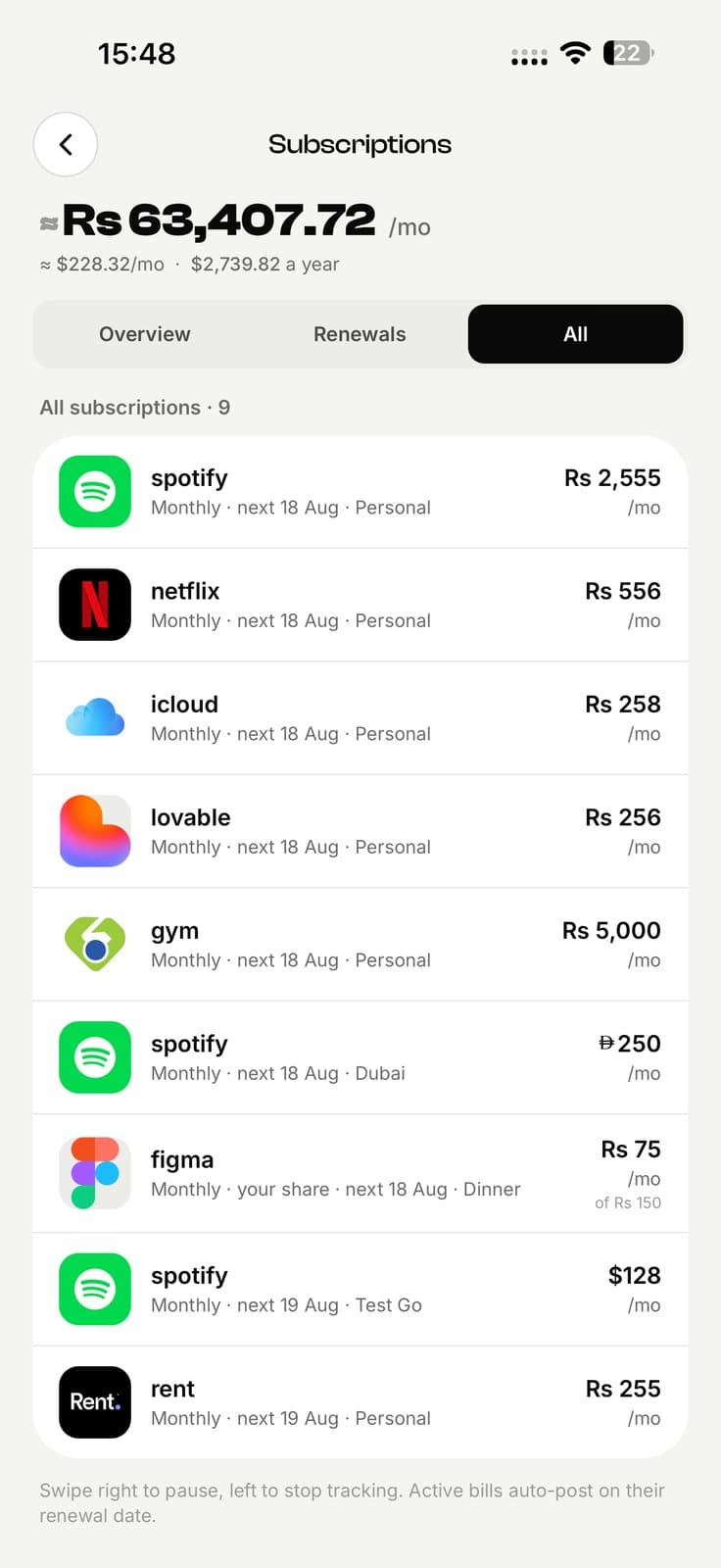
In EconoGlance, a flat's group holds the rent as a recurring expense split exactly as your agreement says, bills as they arrive, and a running balance of who owes whom. Shared subscriptions sit in one list so nobody pays for Wi-Fi three months running. The whiteboard holds the chores rota and house notes, in Pro.
For the wider guide to sharing money with flatmates, read how to split rent and bills with roommates. If you are moving in with a partner rather than friends, the moving-in money conversation covers the differences.