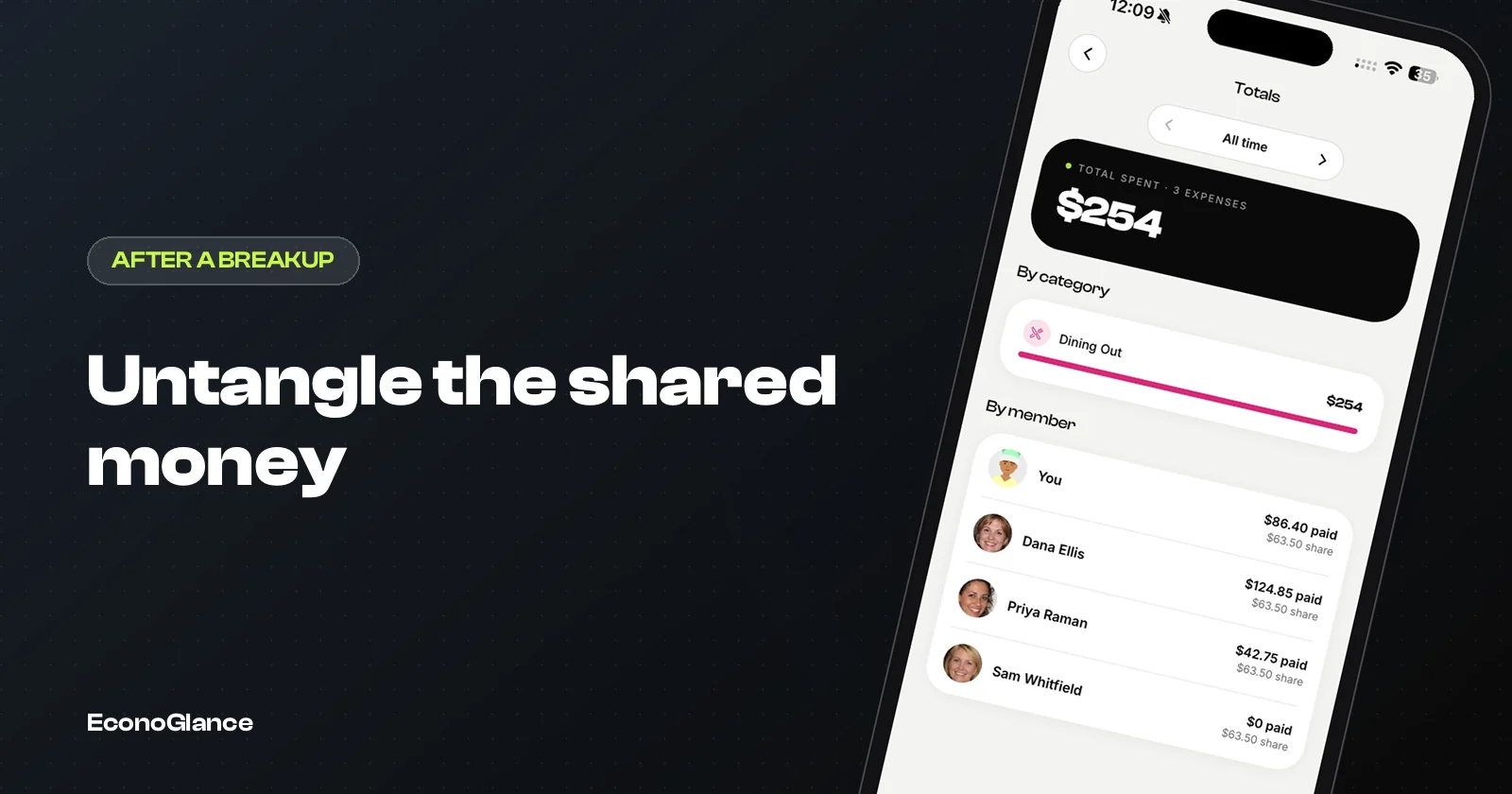
Splitting costs after a breakup goes most smoothly as a checklist: list every shared cost, decide what happens to each, work out one final balance, and settle it in a single payment. The items that need fastest attention are the ones in one person's name, such as utility accounts and subscriptions, because that person stays legally responsible until they are moved or cancelled.
This guide covers the practical money side for couples who lived or spent together. It is not legal advice. Joint leases, mortgages, joint loans and anything involving children need proper advice, and the rules depend on where you live.
Step 1: List everything
Before deciding anything, write down every shared cost. Most of the stress comes from things remembered later.
| Item | Questions to answer |
|---|---|
| Lease or rent | Whose name is on it? Who is staying? When does it end? |
| Deposit | Who paid what share? Who gets it back, and when? |
| Utility accounts | Whose name is each in? Who is paying until it moves? |
| Subscriptions | Streaming, phone plans, gym, cloud storage: who pays, who keeps? |
| Shared purchases | Furniture, appliances, a car: who keeps it, at what value? |
| Money lent | Any loans between you, written down or not |
| Upcoming costs | Bookings, tickets or holidays already paid for |
Step 2: The lease and the deposit
Housing is usually the biggest item and the most time-sensitive.
- If one person stays: they usually take over the rent going forward and pay the leaver their share of the deposit, so the landlord's deposit stays in place.
- If both leave: the deposit comes back at the end of the tenancy and is split by what each paid in, minus any damage either caused.
- If you are both on the lease: you may both remain responsible to the landlord until the lease ends or is changed. Talk to the landlord before assuming otherwise.
Step 3: Bills in one person's name
Utility and internet accounts are usually in one person's name, and that person is responsible for the whole bill.
If the account holder is moving out, move or close the account and take a final meter reading on the move-out date. If the account holder is staying, they take over the bill from that date. Split the final bill up to the move-out date as you split bills before. Quarterly bills that span the date are split by days, which is explained in how to split quarterly bills when people move out.
Step 4: Subscriptions
Subscriptions are easy to forget and keep charging for months.
- List every shared subscription: streaming, music, phone family plans, cloud storage, delivery memberships, gym.
- Decide who keeps each one. The keeper takes over the payment from the next billing date.
- Cancel the ones nobody wants, and remove each other from family plans.
- Change passwords on any shared accounts you keep.
If you are not sure what you are paying for, how to track subscriptions you forgot you were paying for walks through finding them.
Step 5: Shared purchases
Furniture, appliances and a car are the hardest items, because their value is a matter of opinion.
Agree a current value, not the purchase price, for anything one person keeps, then the keeper pays the other their share of that value. A sofa bought jointly for 1,200 and now worth 500, kept by one person, means a payment of 250 to the other. For anything valuable that you cannot agree on, selling it and splitting the proceeds avoids the argument.
A shared car has its own considerations, covered in shared car costs.
Step 6: One final balance
Arguing item by item keeps the conversation going. A single number ends it.
Put every item in one list with what each person owes the other, net the amounts against each other, and settle the difference in one payment. If one person owes 900 for the deposit share and the other owes 350 for a sofa and 120 for the final bills, the net is a single payment of 430. One transfer, one message, done.
| Item | Alex owes Jordan | Jordan owes Alex |
|---|---|---|
| Deposit share (Alex stays) | 900 | |
| Sofa (Jordan keeps) | 350 | |
| Final electricity bill share | 120 | |
| Net: Alex pays Jordan | 430 |
Keeping it calm
The money is rarely what the argument is really about, but it is often where the argument happens.
A written list helps more than anything else, because it turns feelings into items. If talking directly is difficult, send the list in writing and agree to respond within a week. If you shared an expense app while together, its history is a neutral record of who paid what, which saves reconstructing months of spending from memory.
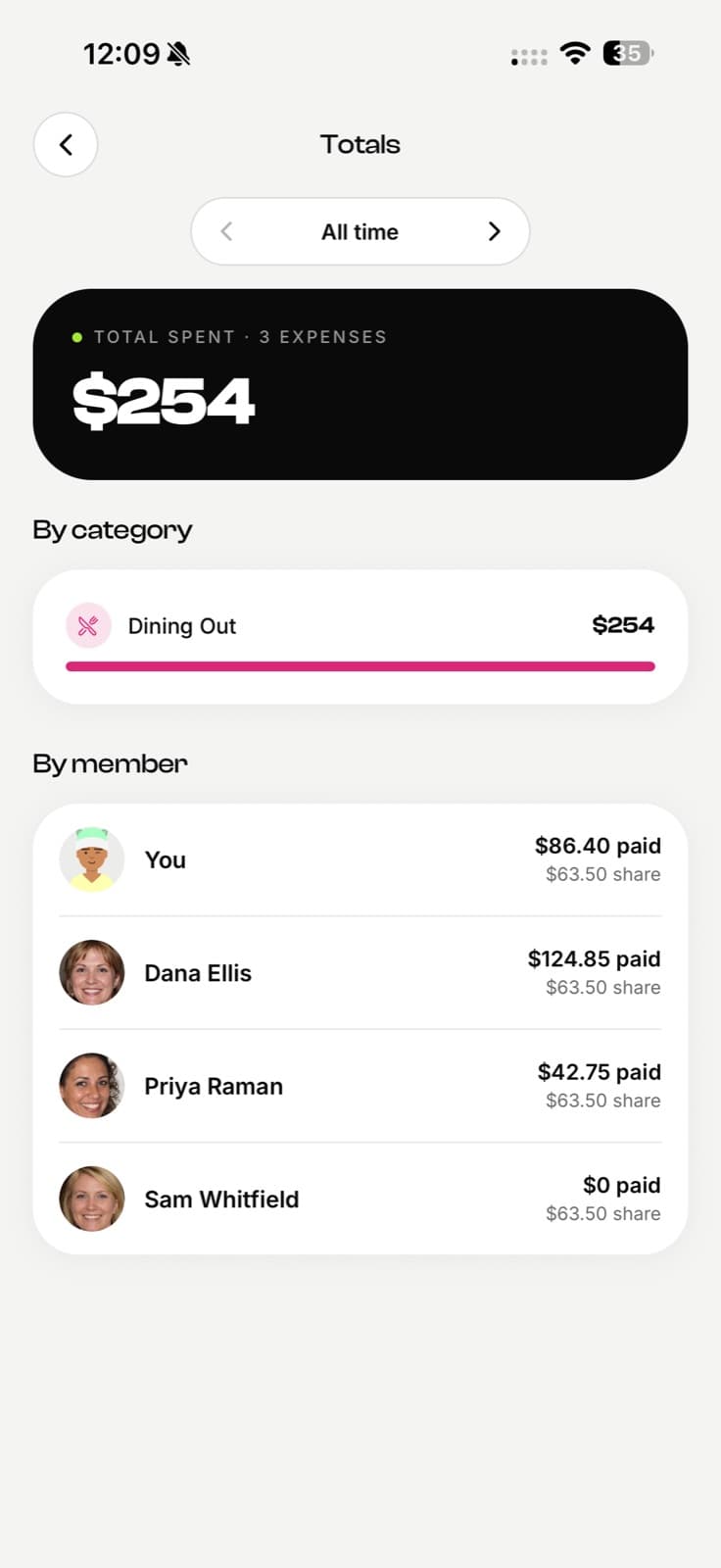
In EconoGlance, the final balance of a shared group is already netted. Settle it in one payment and the group shows as settled up. For future flat shares, the roommate agreement template includes a section on moving out.