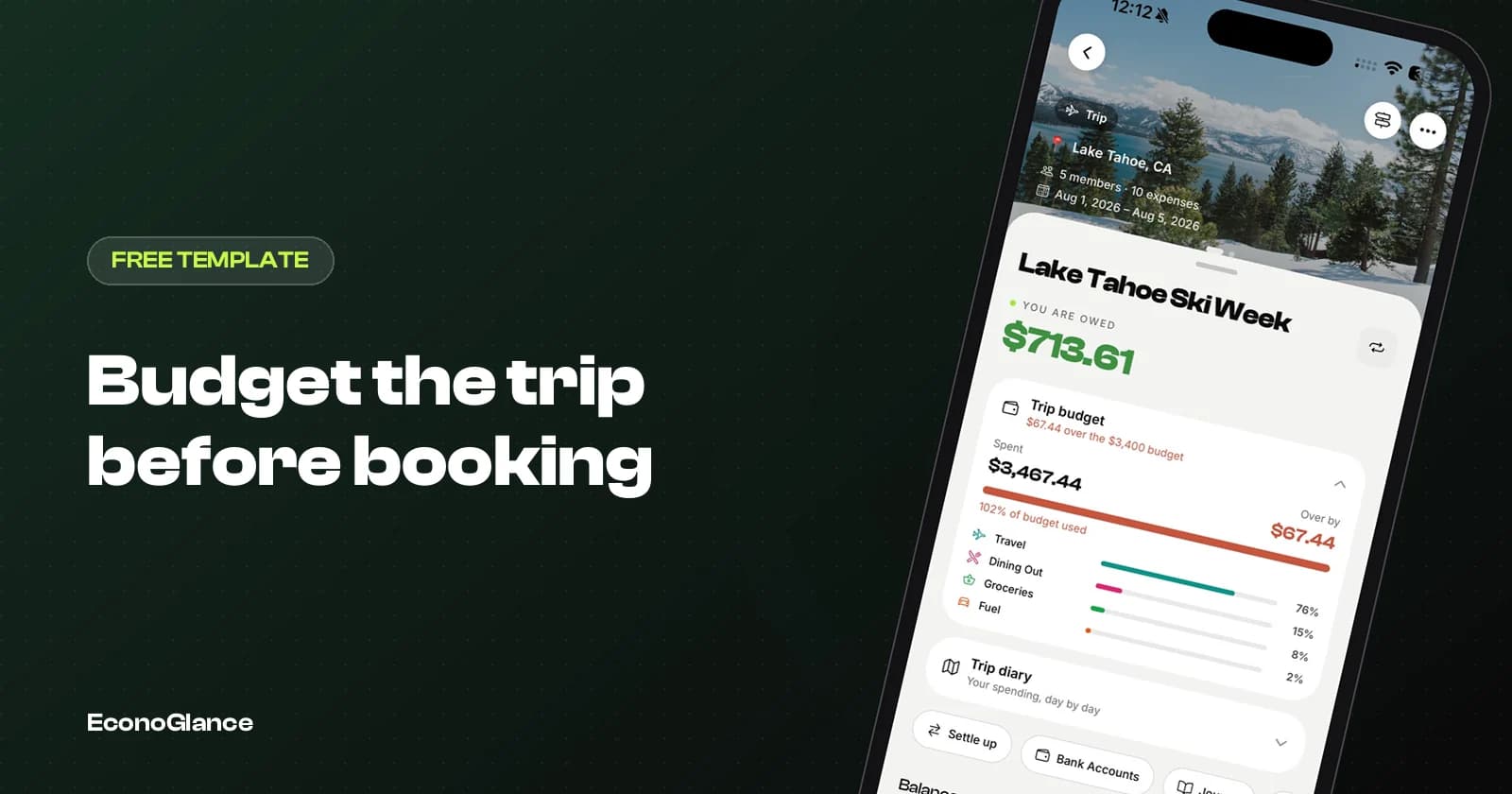
A group trip budget is a per-person estimate of what the trip will cost, broken into categories and agreed by everyone before money is spent. The template below gives you the categories, the formulas and a tab for tracking what you actually spend, so the plan and the reality sit side by side.
Opens in Google Sheets, Excel or Numbers. Columns for planned and actual cost, per-person totals and a payments-in tracker.
How the template is laid out
One sheet, four blocks, filled in from top to bottom.
| Block | What goes in it |
|---|---|
| Trip details | Destination, dates, number of people, currency |
| Budget by category | Each cost, whether it is shared or per person, planned cost and actual cost |
| Per-person total | The planned and actual cost for one person, including the buffer |
| Payments in | Who has paid their share or deposit, and how much is still due |
The five categories
Almost every cost on a group trip fits in one of five.
| Category | Typical costs | Usually split |
|---|---|---|
| Transport | Flights, fuel, car hire, tolls, transfers | Per person, or by who travelled |
| Accommodation | Hotel, rental, cleaning fee | By room or bed, or equally |
| Food | Group meals, groceries, snacks | Equally for shared meals |
| Activities | Tickets, tours, equipment hire | Only among people who took part |
| Buffer | 10% of the total for surprises | Equally |
Mark each line as shared or per person. A shared cost, like a rental car, is divided by the group. A per-person cost, like a flight, is the same for each person and not divided. Mixing the two up is the most common way a trip budget comes out wrong.
A worked example
Five friends, four nights, a road trip in Pakistan's northern areas, budgeted in rupees.
| Line | Shared or per person | Planned | Per person |
|---|---|---|---|
| Car hire with driver | Shared | Rs 90,000 | Rs 18,000 |
| Fuel and tolls | Shared | Rs 40,000 | Rs 8,000 |
| Hotel, two rooms, four nights | Shared | Rs 96,000 | Rs 19,200 |
| Food | Shared | Rs 60,000 | Rs 12,000 |
| Activities | Shared | Rs 25,000 | Rs 5,000 |
| Subtotal | Rs 311,000 | Rs 62,200 | |
| Buffer 10% | Shared | Rs 31,100 | Rs 6,220 |
| Total | Rs 342,100 | Rs 68,420 |
Rs 68,420 a person is the number each friend decides on. If it is too high for someone, change the plan now, a cheaper hotel or one fewer night, rather than discovering it on day three.
Five budget mistakes groups make
Most trip budgets fail in the same few ways.
- Budgeting the group total and forgetting to divide it. People decide by their own per-person number.
- Leaving out transport to the start point, such as the flight or bus to where the trip begins.
- Treating per-person costs as shared, which divides a flight five ways by mistake.
- No buffer, so every small overrun becomes a debt to whoever paid.
- Budgeting activities everyone will do, when only some will. Mark optional activities and let people opt in.
A good test before booking: read the per-person total out to the group and ask if anyone would struggle with it. If someone hesitates, adjust the plan now. A cheaper hotel is an easier conversation in the planning stage than a missing friend on the trip.
Collecting money before the trip
The template's payments-in block tracks deposits.
Asking everyone for a deposit, for example half their per-person total, before booking anything does two things. It confirms who is actually coming, and it means the person booking is not lending money to the group. Many groups go further and put the whole budget into a shared pot that pays shared costs during the trip.
How to run that pot fairly is covered in the shared trip fund: how to run a kitty that stays honest.
Tracking planned against actual
Fill in the actual column as you spend, not after you get home.
A quick check each evening, five minutes with the sheet or the app, tells the group whether it is on budget. If food is running 30% over by day two, you can choose a cheaper dinner on day three. If you only find out at home, the only choice left is who pays the overrun.
Doing the same thing in EconoGlance
The template works on its own. If you would rather not maintain a spreadsheet on a trip, EconoGlance does the same job on everyone's phone.
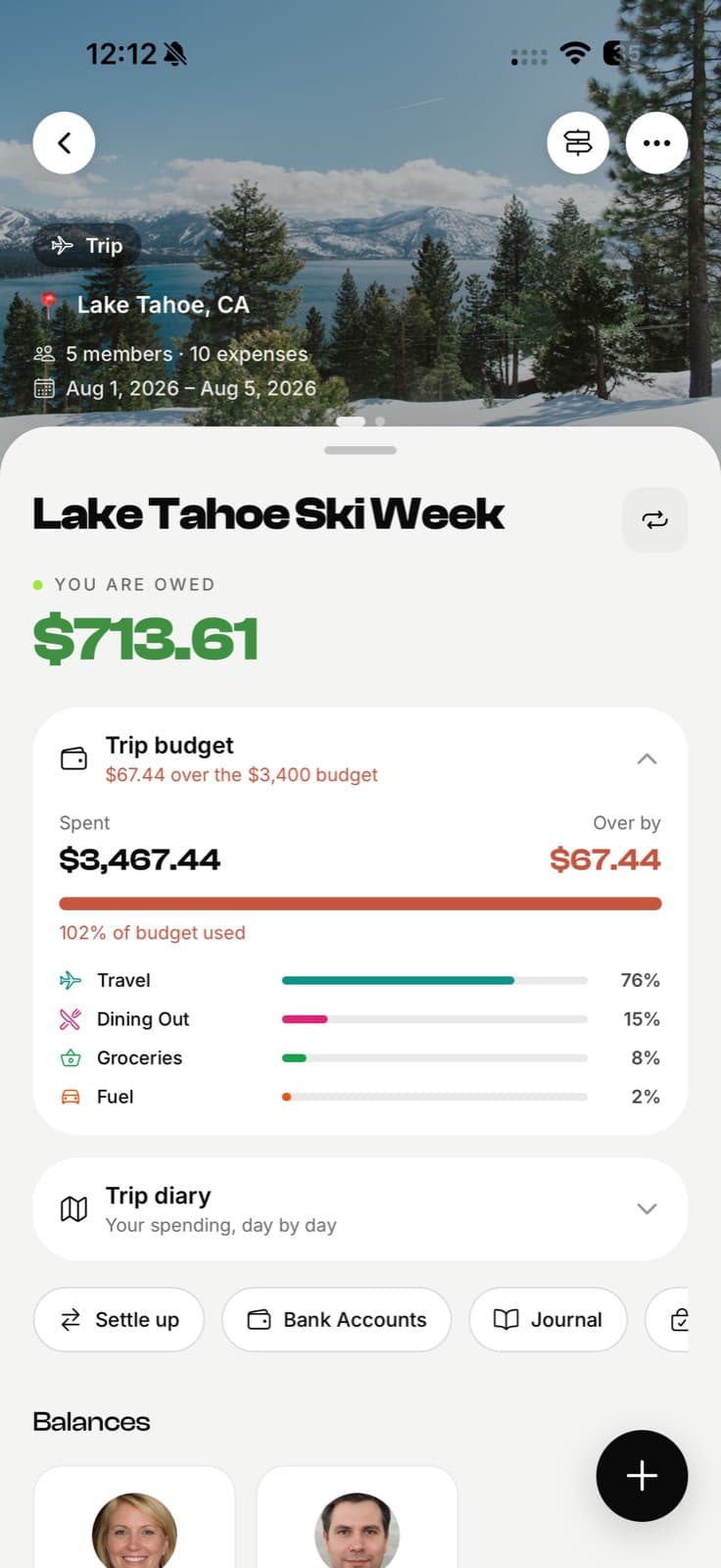
A trip group has a trip budget that counts down as expenses are added, spending by category and by day, and balances that show who owes whom. Trip Deposit is a shared pot for the trip: everyone adds money before you go, shared costs are paid from it, and whatever is left at the end is refunded based on what each person put in and used. Trip budgets and Trip Deposit are both on the free plan.
For the planning conversation itself, read how to budget a group trip before anyone books anything. If rooms are not equal, how to split a vacation rental when the rooms aren't equal has a fair method.